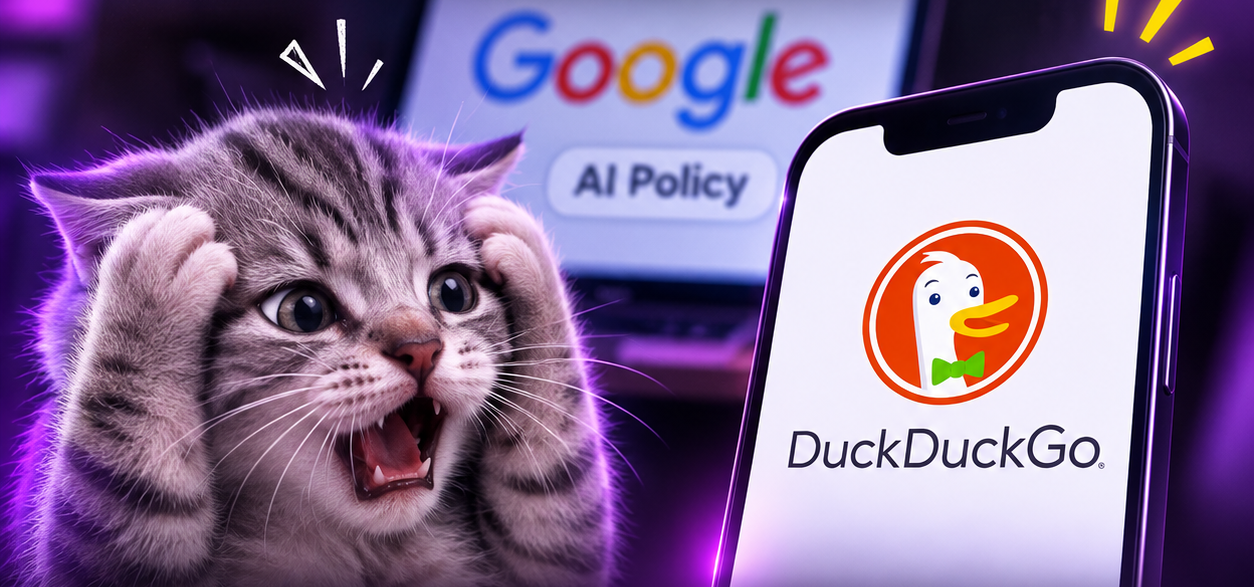
What happens when schools want Google Search but don’t want AI? DuckDuckGo thinks it has the answer.
Google has a problem it may not have expected. Its growing integration of artificial intelligence into Search is creating an opportunity for competitors, and DuckDuckGo is moving quickly to take advantage of it.
On November 3, Google announced that its AI tools, including Gemini and AI-powered features in Search, would be switched off by default for K-12 student accounts unless school administrators explicitly enabled them.
But there is a catch. Schools that want to keep AI completely out of students’ Google accounts may also lose access to Google Search.
DuckDuckGo is now pitching itself as an alternative.
Why Google’s new policy is creating controversy
Google says its updated approach gives schools more control over how students use AI.
However, traditional Google Search is increasingly connected to AI features such as AI Overviews and AI Mode. According to Google’s vice president of education, Chris Phillips, Search and AI are deeply integrated.
That creates a difficult choice for schools: enable Google’s Search experience with its AI features or switch off Search for students altogether.
For educators concerned about AI-generated homework, overdependence on chatbots, and students losing independent research skills, neither option is ideal.
Google has also introduced Guided Learning, an AI-powered experience designed to help students work through problems instead of simply giving them answers. While this could support learning, some schools still want the option to remove AI from the classroom entirely.
DuckDuckGo sees an opportunity
DuckDuckGo is positioning itself as a search alternative for schools that want more control.
The company’s founder and CEO, Gabriel Weinberg, shared documentation explaining how schools can change their default search engine to DuckDuckGo. He also invited schools to contact the company for assistance.
DuckDuckGo’s chief public affairs officer, Kamyl Bazbaz, also criticized Google’s approach, arguing that schools should not be forced to accept AI to retain access to search.
The company’s pitch is straightforward: schools should be able to search the web without having AI-generated answers built into the experience.
DuckDuckGo isn’t against AI. It wants users to have a choice.
Interestingly, DuckDuckGo is not rejecting artificial intelligence altogether.
The company offers its own AI products, including Duck.ai, a chat interface, and an AI search assistant.
The difference is control.
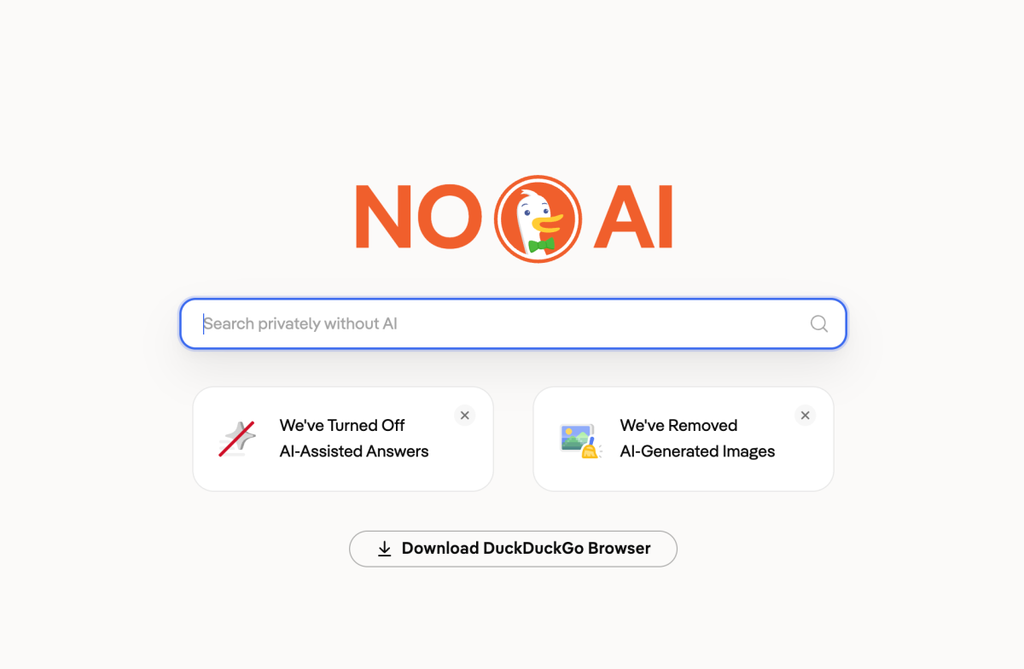
DuckDuckGo allows users to disable AI features through its search and browser settings. It also offers a dedicated experience at noai.duckduckgo.com, where AI-assisted answers, AI-generated images, and AI feature suggestions are turned off.
This gives schools another option: use a search engine that offers AI features when wanted, but does not require them to remain enabled.
DuckDuckGo also reported earlier in 2026 that its app installs had increased by 30%, which the company connected to growing user interest in alternatives to Google’s AI-powered Search.
Google has a massive advantage in education
Replacing Google will not be easy.
Google has spent years building its presence in schools through Chromebooks, Google Classroom, Gmail, Docs, and other education products.
According to figures previously published by Google, around 50 million Chromebooks are used by students and educators, while Google Classroom serves more than 150 million users globally.
That ecosystem gives Google a powerful position. Schools already rely on its tools for everyday teaching, communication, assignments, and research.
DuckDuckGo may offer a compelling alternative for search, but convincing schools to change established technology systems is a much bigger challenge.
What this means for the future of AI in education
This debate goes beyond two search engines competing for users.
Schools are trying to figure out how much AI students should use, when it genuinely helps learning, and when it risks replacing independent thinking.
AI can explain difficult concepts, support research, and help students learn at their own pace. But educators also need control over how these tools are introduced and used.
Google’s policy highlights a growing tension in the technology industry: companies are integrating AI into products faster than institutions can decide how they want to use it.
For DuckDuckGo, this could be an opportunity to build relationships with schools that value privacy and choice.
For Google, it is a reminder that making AI central to a product does not mean every customer wants it there.
The next battle in search may not be about who has the smartest AI. It may be about who gives users the freedom to switch it off.
Source: TechCrunch, November 4, 2026. “DuckDuckGo pitches itself to schools amid backlash over Google’s AI policy.”

