
The current wave of generative AI promises a fundamental shift in personal and professional productivity, offering to handle everything from drafting emails and organizing calendars to summarizing complex meeting transcripts. Yet, there is a mounting consensus among industry observers that layering advanced language models over fundamentally broken workflows is a recipe for expensive inefficiency. Before organizations rush to integrate these tools, the focus must shift from the novelty of automation to the underlying structure of the tasks themselves.
The Trap of Automating Inefficiency
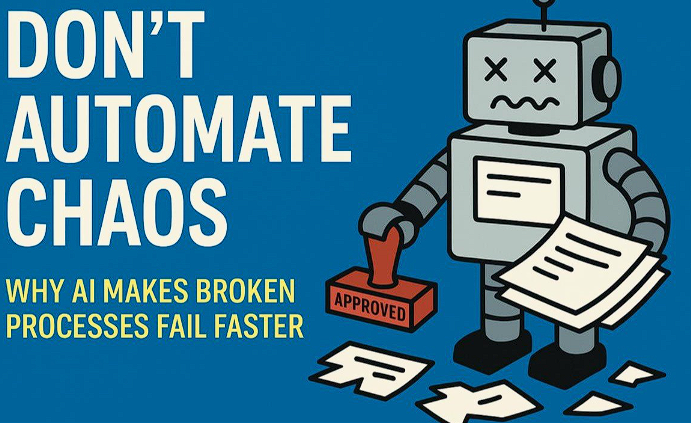
Applying artificial intelligence to a disorganized process does not solve the root problem; it simply scales it. When an AI tool is tasked with summarizing meetings that should not have occurred or drafting emails for projects that lack clear objectives, it creates a layer of synthetic noise rather than meaningful output. For many businesses, the allure of immediate acceleration often masks the fact that the workflow being automated was never optimized for human performance in the first place. Relying on sophisticated algorithms to compensate for poor time management or opaque communication channels is ultimately a performance bottleneck disguised as a digital transformation.
Architecting Smarter Workflows
True integration success relies on the maturity of the underlying operation. Professionals who audit their daily routines—identifying bottlenecks, refining communication loops, and clarifying project goals—are better positioned to see actual gains from AI. When these tools are introduced to a process that is already lean and purposeful, they act as force multipliers. However, if the foundation is chaotic, the AI model serves only to propagate those errors at a much higher velocity, leading to team fatigue and wasted compute resources.
Prioritizing Human Intent
The most effective use of current AI tooling is to support, rather than dictate, the rhythm of a workday. Tools that suggest breaks or offer meeting summaries are only as valuable as the human intent behind them. If an individual lacks a clear strategy for their time, the suggestions offered by an automated assistant are likely to be ignored or, worse, followed blindly, leading to a loss of agency. The integration of AI into the modern tech stack demands that workers become better process managers, ensuring that the technology serves the workflow rather than forcing the workflow to bend to the limitations of the software.
For real-time alerts on similar AI and tech updates, subscribe to the Tepi AI newsletter. Full details and application links are available in our dashboard.