Introduction
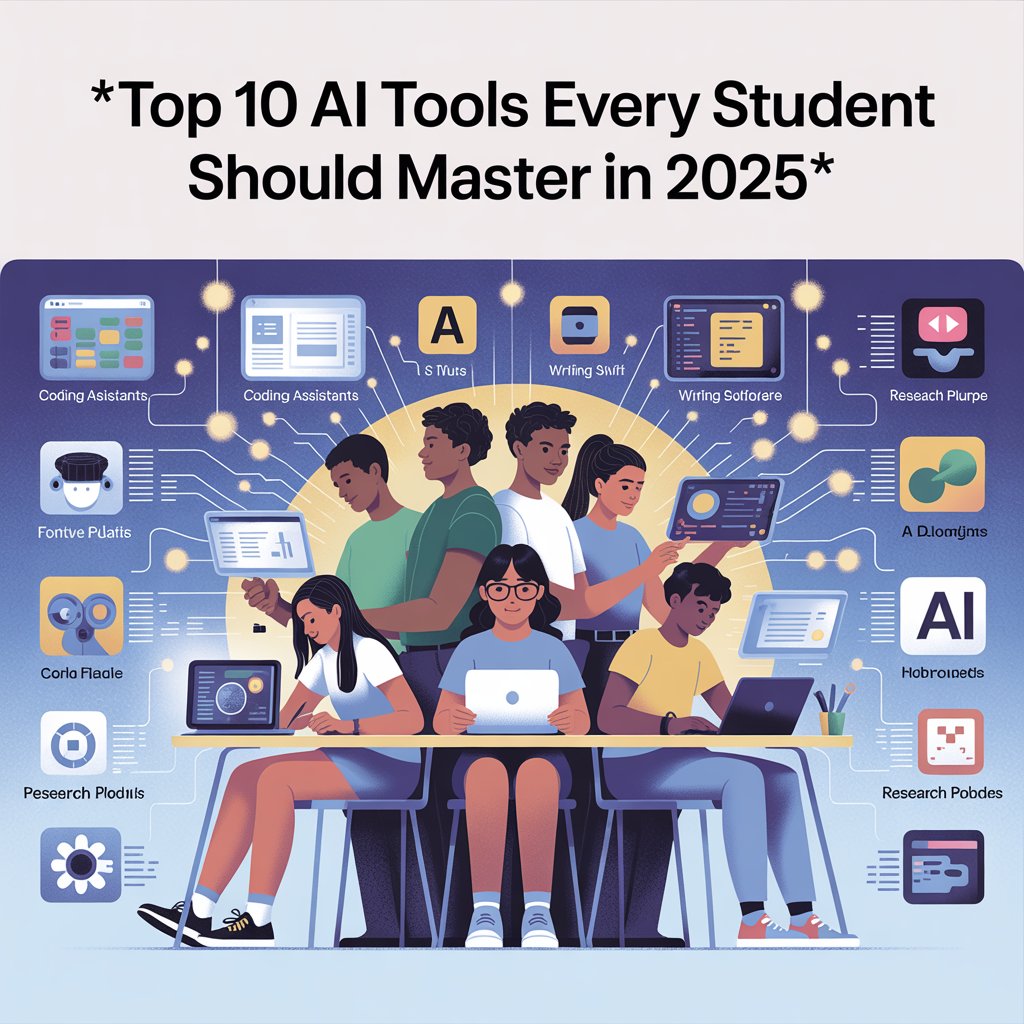
In today’s fast-paced world, AI fluency is no longer optional—it’s essential. Whether you’re tackling a research project, building a startup prototype, or automating daily tasks, the right AI tools can give you a decisive edge. Here are the top 10 AI platforms and libraries every student should learn in 2025.
1. TensorFlow Why it matters: Industry-standard for deep learning.Use cases: Image recognition, NLP, custom neural networks.Getting started: Official tutorials + Coursera’s “TensorFlow in Practice.”
2. PyTorch Why it matters: Flexible, Pythonic, research-friendly.Use cases: Academic research, dynamic computation graphs, vision models.Getting started: Fast.ai’s free courses.
3. OpenAI’s GPT API Why it matters: State-of-the-art in natural language generation.Use cases: Chatbots, content generation, code assistants.Getting started: Sign up at OpenAI and experiment with Playground.4. Scikit-LearnWhy it matters: User-friendly for classic ML algorithms.Use cases: Classification, regression, clustering.Getting started: “Hands-On Machine Learning” book & scikit-learn docs.
5. Hugging Face Transformers Why it matters: Huge model hub and easy deployment.Use cases: Text classification, question answering, translation.Getting started: Hugging Face tutorials on YouTube.
6. Google Colab Why it matters: Free GPUs and no-setup notebooks.Use cases: Rapid prototyping, collaborative coding.Getting started: Simply log in with your Google account.
7. Streamlit Why it matters: Build interactive data apps in minutes.Use cases: Dashboards, demoing ML models to non-tech audiences.Getting started: Streamlit’s “Hello, World!” guide.
8. OpenCV Why it matters: Comprehensive computer vision library.Use cases: Facial recognition, video analysis, AR.Getting started: Official tutorials & PyImageSearch blog.
9. MLflowWhy it matters: End-to-end ML lifecycle management.Use cases: Experiment tracking, model registry, deployment.Getting started: MLflow quickstart guide.
10. FastAPI Why it matters: Lightning-fast Python web framework.Use cases: Serving ML models as REST APIs.Getting started: FastAPI docs + tutorial by Sebastián Ramírez.
Conclusion & Next Steps
Mastering these tools will set you apart in internships, hackathons, and research labs. Ready to get hands-on?–– Join Tepi AI’s Workshops & Hackathons!
At Tepi AI, we run instructor-led, project-driven AI workshops that guide you through these tools step by step. Our mentors from IIT Kanpur alumni and tech leaders will ensure you build a portfolio that recruiters can’t ignore.🔗 Get Started Today: https://www.tepiai.com