Google Project Suncatcher has reached its first major milestone: an AI model running on Google’s own hardware in orbit has successfully sent a response back to Earth. Its first task? Writing a poem about space.
The experiment marks an early step towards Google’s ambitious idea of building AI computing infrastructure beyond Earth.
A Satellite That Can Run AI
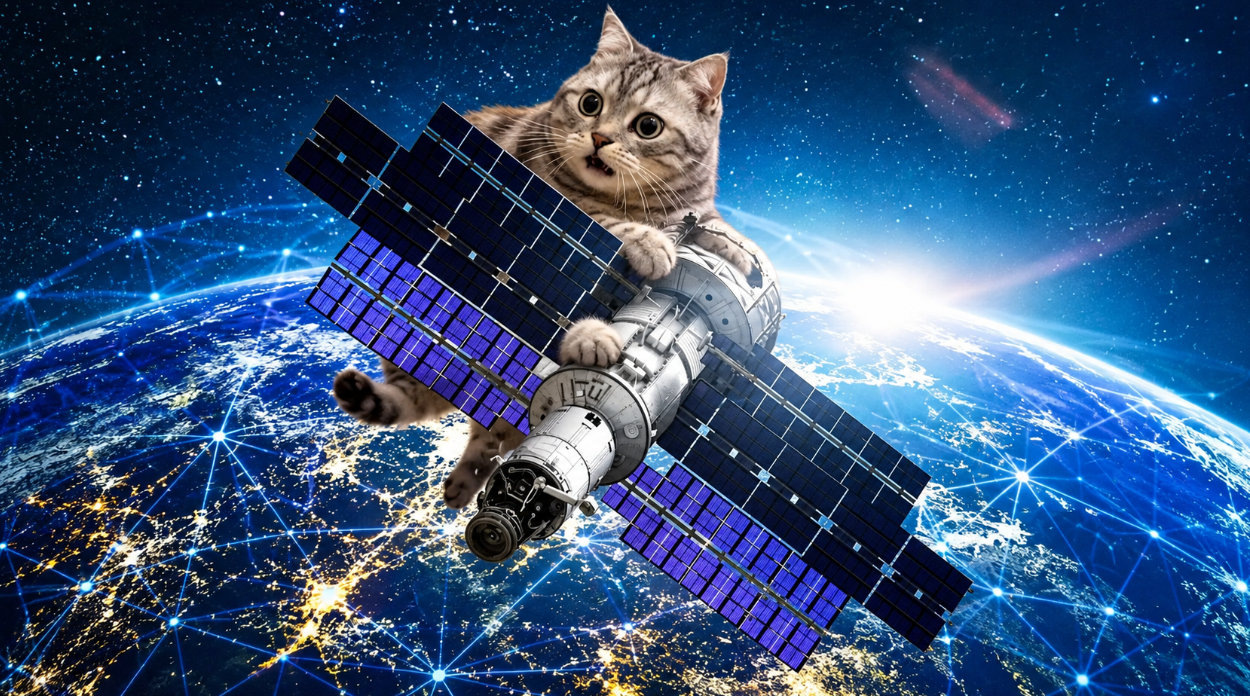
Launched on October 1 aboard a SpaceX Falcon 9 rocket, the prototype satellite is part of Google’s Project Suncatcher, a long-term research initiative exploring space-based AI data centres. The satellite carries a Google Tensor Processing Unit (TPU), the company’s custom AI chip, along with Gemma 4, an open AI model developed by Google DeepMind.
After completing around three weeks of initial testing, engineers sent the model a prompt asking it to write a haiku about space. The satellite successfully generated the poem and transmitted it back to Earth. Google described this as the first AI response from a data-centre-class TPU operating in orbit.
Why Does Google Want Data Centres in Space?

AI requires enormous computing power, and traditional data centres consume significant amounts of electricity and land.
Google Project Suncatcher explores whether solar-powered satellites could eventually provide an alternative. In low Earth orbit, satellites can access sunlight for much longer periods than solar installations on the ground. Google’s long-term vision involves connecting multiple satellites equipped with AI chips, allowing them to work together on larger computing tasks.
However, the current prototype is far from a fully operational data centre. Its TPU can run for only around 20 minutes at a time because of power constraints.
The Biggest Challenges Are Still Ahead
Operating AI hardware in space comes with engineering challenges that do not exist in traditional data centres.
Radiation can cause errors in computer memory, while extreme temperatures and the absence of conventional airflow make cooling difficult. Google is now testing how its hardware performs under these actual orbital conditions. The next milestone is expected in 2027, when Google plans to launch two additional satellites to test higher-power systems and laser-based communication between spacecraft.
Is the Future of AI in Space?
Google Project Suncatcher is still an experimental project, and commercial space-based data centres remain a long-term possibility rather than an immediate reality.
But the experiment raises an interesting question: as AI computing demand continues to grow, could the next generation of data centres operate beyond our planet? For now, Google’s satellite has written its first poem. The bigger test will be proving that AI hardware can reliably work in space.
Follow Tepi AI for more updates on AI, emerging technology and startup innovation.
-Written By Shubham Singla