
Nvidia has spent years convincing investors that it is the company powering the future of artificial intelligence. Now, its biggest challenge may not be coming from AMD, Google, or a new AI chipmaker. It is coming from a controversy surrounding the person who built the company.
Nvidia CEO Jensen Huang is facing an extraordinary leadership controversy after admitting to an extramarital affair and apologizing to his family and colleagues. The situation has become more serious because the woman identified in media reports, Alice Huang, a former executive at Singapore-based chip company Megaspeed, has been linked to allegations of a foreign intelligence operation.
The developments have prompted Nvidia’s board to launch an independent investigation into whether its founder and CEO was targeted by a foreign intelligence effort.
Investors have already reacted. Nvidia shares fell approximately 3.7% on Robinhood’s overnight trading platform, while after-hours trading and perpetual futures tracked by Reuters indicated a decline of around 3.4% from Friday’s closing price of $186.64.
But the bigger question is not whether Nvidia can recover from one difficult trading session.
Could this controversy expose a leadership risk that investors have underestimated, and what does it mean for Nvidia’s future?
Let’s examine the facts, the stock market reaction, the business risks, and the possible scenarios ahead.
1. What exactly happened to Jensen Huang?

The controversy involves two separate but connected developments.
First, Jensen Huang acknowledged in a message to Nvidia employees that he had been unfaithful to his wife. He apologized to his family and colleagues and accepted responsibility for his actions.
Second, Nvidia’s board announced on November 8 that it would launch an independent investigation following reports that Huang had been the target of a foreign intelligence effort.
The reports involve Alice Huang, a former executive of Megaspeed, a Singapore-based technology company that purchases Nvidia AI chips. US authorities have reportedly scrutinized the company over suspicions related to access to advanced AI chips restricted from shipment to China.
The New York Times and other media reports have raised questions about the relationship and possible intelligence concerns.
It is important to distinguish what is established from what remains under investigation:
- Confirmed: Jensen Huang admitted to an extramarital affair.
- Confirmed: Nvidia’s board has launched an independent investigation.
- Reported allegation: Alice Huang was suspected by US authorities of being connected to Chinese intelligence activities.
- Not established: That Nvidia’s confidential information or US national security information was compromised.
- Not established: That Jensen Huang knowingly participated in espionage or an illegal chip transfer operation.
Nvidia’s board has explicitly stated that it currently has no reason to believe national security or company secrets were compromised.
That distinction matters. An investigation is not proof of wrongdoing.
2. Why did Nvidia stock fall?
Nvidia shares came under pressure as investors reacted to the news.
According to Reuters, Nvidia shares traded around $180.30 in after-hours and perpetual futures markets, approximately 3.4% below Friday’s Nasdaq closing price of $186.64.
Moneycontrol, citing Bloomberg reporting, also reported a decline of around 3.7% on Robinhood’s overnight trading platform.
These figures refer to trading outside the regular Nasdaq session. They should not be confused with a confirmed closing-price decline in the next full trading session.
Why did investors react so quickly?
Because Nvidia is not just another technology company. It is one of the most important companies in the global AI infrastructure market.
Its valuation depends not only on its financial performance but also on investor confidence in its ability to maintain technological leadership, execute its strategy, manage geopolitical risks, and continue delivering growth.
When a controversy directly involves the company’s founder and CEO, investors have to consider questions that go beyond quarterly revenue.
The market is effectively trying to price in uncertainty.
3. The biggest risk is not the affair. It is the national security investigation.

A CEO’s personal controversy can damage a company’s public image, but a potential national security investigation creates a different category of risk.
Nvidia operates at the centre of the US-China technology competition. Its advanced GPUs are essential for developing and running powerful AI systems.
The US government has imposed restrictions on exports of certain advanced semiconductor products to China. These controls are designed to limit access to technology considered strategically important.
Megaspeed’s connection to Nvidia matters because it purchases AI chips from the company and has reportedly faced scrutiny over suspected efforts to help restricted chips reach Chinese users.
This creates several questions investors will want answered:
Could the investigation affect Nvidia’s government relationships?
Nvidia has significant commercial and strategic relationships with US technology companies, government agencies, and policymakers. Any suggestion that its leadership was exposed to a foreign intelligence operation could increase scrutiny.
Could chip export controls become stricter?
If investigators uncover evidence of improper access, preferential treatment, or weaknesses in compliance processes, regulators could examine Nvidia’s customer relationships and export-control procedures more closely.
Could Nvidia face reputational damage?
Large institutional customers and government-related buyers may become more cautious when evaluating security-sensitive technology suppliers.
However, none of these outcomes has been established. Nvidia’s board has said it has no reason to believe its secrets or national security information were compromised.
The investigation’s findings will matter much more than the headlines.
4. Jensen Huang is Nvidia’s biggest strength. He may also represent a leadership risk.
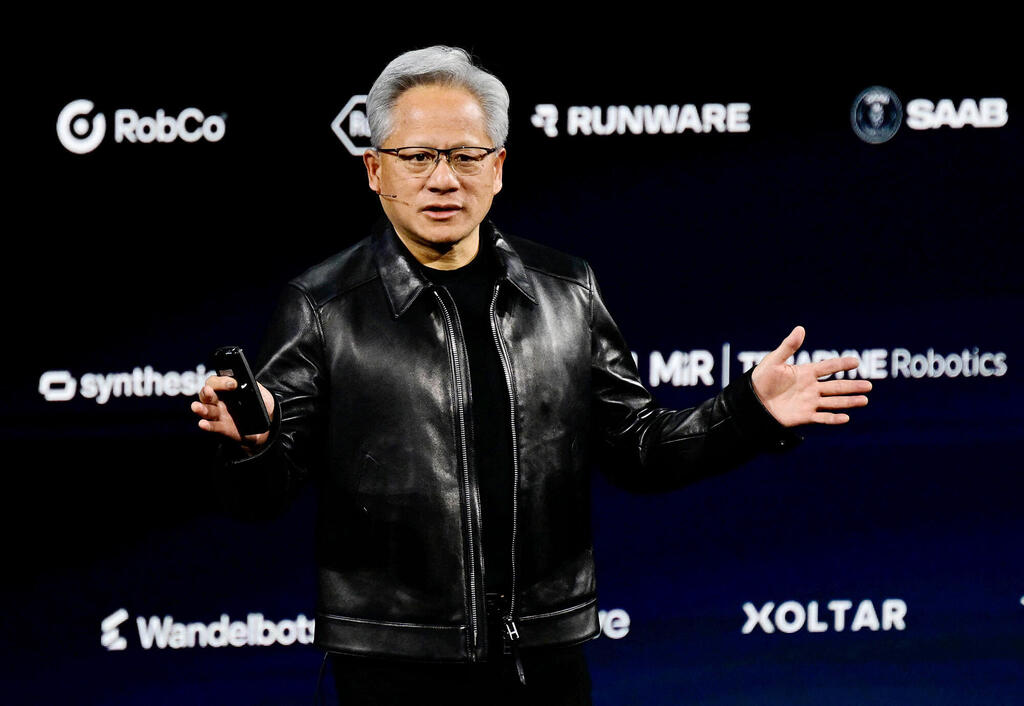
This is arguably the most important long-term issue for investors.
Jensen Huang co-founded Nvidia in 1993 and has led the company for more than three decades. He has become one of the most recognisable figures in the AI industry.
His influence extends across product strategy, GPU development, partnerships, customer relationships, and the company’s long-term direction.
Nvidia’s management structure is also unusual. Reports have highlighted that approximately 60 senior executives report directly to Huang.
This structure has helped the company move quickly in a rapidly changing technology market. But it also raises a difficult question:
What happens to Nvidia if Jensen Huang cannot continue leading the company?
This is known as key-person risk.
When a company’s strategy, relationships, and decision-making are closely associated with one individual, uncertainty surrounding that person can affect how investors value the entire business.
Consider the potential consequences:
- Strategic decisions could face delays during a leadership transition.
- Major customers and partners may seek reassurance about continuity.
- Investors may question whether the company’s execution depends too heavily on Huang.
- The board may face pressure to demonstrate that a credible succession plan exists.
There is no publicly confirmed immediate CEO transition. Nvidia has said Huang intends to continue leading the company and will cooperate with the investigation.
But the controversy could encourage investors to look more closely at succession planning and the strength of Nvidia’s management structure beyond its founder.
5. Nvidia’s business fundamentals are still a major part of the story
It would be a mistake to analyse Nvidia only through the current controversy.
The company remains one of the biggest beneficiaries of the global AI infrastructure boom.
Its latest reported quarterly results provide important context.
For the second quarter of fiscal 2027, ended July 26, 2026, Nvidia reported:
| Financial metric | Q2 FY2027 |
|---|---|
| Total revenue | $96.2 billion |
| Data Center revenue | $89.0 billion |
| Revenue growth year over year | 106% |
| Data Center growth year over year | 117% |
| GAAP gross margin | 75% |
| GAAP net income | $59.7 billion |
The company’s Data Center business accounted for the overwhelming majority of its revenue, reflecting demand for AI computing infrastructure.
Nvidia also projected third-quarter fiscal 2027 revenue of approximately $108 billion, plus or minus 2%, in its August guidance.
These numbers demonstrate why investors cannot simply dismiss Nvidia because of a leadership controversy.
The company has a substantial underlying business, major customer relationships, and a central position in the AI computing ecosystem.
The key question is whether the controversy changes the assumptions investors make about its future growth.
6. Why Nvidia’s November earnings report is especially important
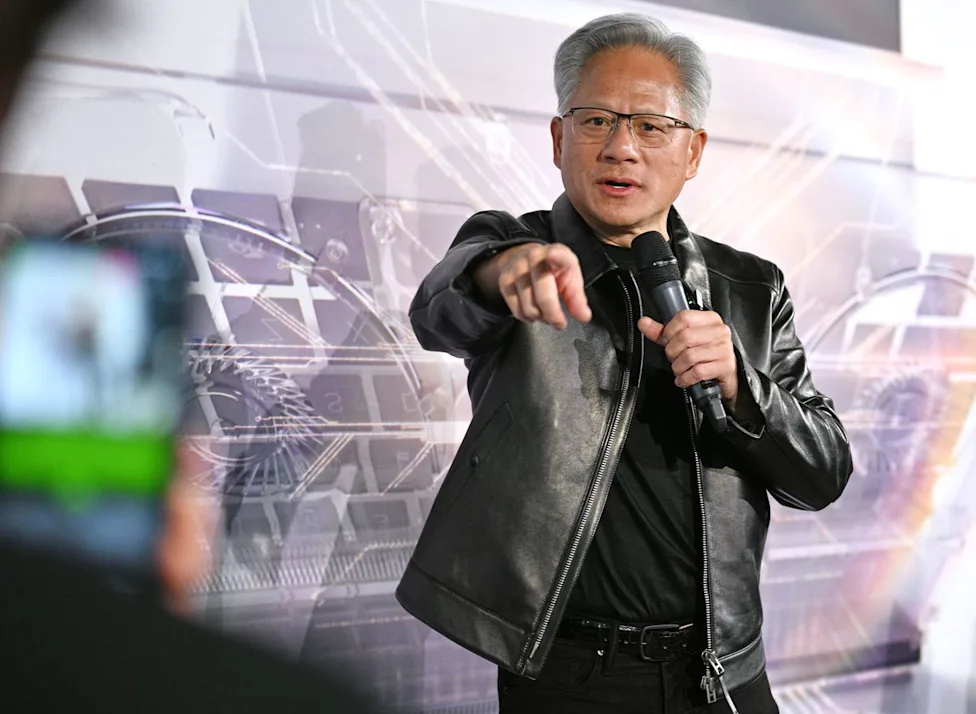
Nvidia’s next earnings announcement is another major event investors will be watching.
The company is scheduled to report its third-quarter fiscal 2027 results on November 18, 2026.
This timing makes the controversy particularly sensitive.
Investors will be looking for answers to several questions:
Will Nvidia maintain its growth trajectory?
The market will want evidence that demand for AI infrastructure remains strong and that customers are continuing to invest in Nvidia’s products.
Will management address the investigation?
Investors may look for updates about the board’s inquiry, internal controls, and whether the company believes its operations have been affected.
Will export restrictions affect future revenue?
Any change in US policy or Nvidia’s ability to serve international customers could influence its long-term growth outlook.
Will the board provide reassurance about leadership continuity?
A clear governance response could help reduce uncertainty, although it cannot replace the findings of an independent investigation.
The earnings report will not necessarily resolve the controversy. But it could help investors separate Nvidia’s operating performance from its leadership-related risks.
7. Three possible scenarios for Nvidia stock
Rather than predicting a specific share price, it is more useful to examine three possible outcomes.
Scenario 1: The investigation finds no material compromise
This would be the most straightforward outcome for Nvidia’s business.
If the independent investigation finds no evidence that company secrets or national security information were compromised, and there are no significant regulatory consequences, the immediate uncertainty could gradually reduce.
Investors could return their attention to revenue growth, AI chip demand, product launches, margins, and competition.
However, the company may still face reputational questions and greater scrutiny of its governance practices.
What investors would watch: The board’s findings, management continuity, and the stock’s reaction to earnings.
Scenario 2: The investigation creates prolonged uncertainty
The investigation could take time, and even without evidence of a major breach, uncertainty could remain.
This may create a valuation overhang, meaning investors demand a lower valuation until they have greater confidence in the company’s leadership and governance.
Nvidia could continue growing financially while its stock experiences volatility.
What investors would watch: Further board disclosures, regulatory statements, institutional investor reactions, and management commentary.
Scenario 3: Serious compliance or leadership issues emerge
This would be the most consequential scenario.
If investigators uncover evidence of compromised information, improper business dealings, or significant failures in internal controls, Nvidia could face regulatory scrutiny, customer concerns, and potentially stricter restrictions.
If Huang’s ability to lead the company were materially affected, the absence of a clearly established successor could become an additional concern.
This scenario could have consequences beyond a temporary stock-price decline.
However, it is important to emphasise that these are hypothetical risks, not established findings.
What investors would watch: Official investigation results, government action, export-control developments, and any changes to Huang’s leadership position.
8. What are analysts and investors saying?
The reaction among market commentators has been mixed.
Analysts quoted by Moneycontrol have highlighted the possibility that uncertainty around Huang’s leadership could weigh on Nvidia shares, particularly because of his central role in the company’s success.
Others have argued that the controversy may have a limited effect on the company’s underlying business if AI infrastructure demand remains strong and the investigation does not uncover material problems.
There is also a broader market issue: Nvidia was already facing questions about the sustainability of AI infrastructure spending and the high expectations built into technology valuations.
This means the controversy is arriving at a time when investors are already sensitive to negative news.
The Reddit discussion shared by investors in r/hyderabad also illustrates how quickly the story is spreading among retail market participants. However, social media reactions are useful as a snapshot of sentiment, not as evidence of the investigation’s findings or a reliable forecast of Nvidia’s stock price.
9. The risks investors should monitor from here
| Risk | Why it matters | What to watch |
|---|---|---|
| Leadership uncertainty | Huang has a central role in Nvidia’s strategy | Board updates and succession planning |
| National security investigation | Could create regulatory and geopolitical exposure | Independent investigation findings |
| US-China chip restrictions | Could affect customer access and export permissions | US government policy announcements |
| Customer confidence | Large buyers need reliable suppliers and governance | Customer relationships and business updates |
| AI spending slowdown | Nvidia’s growth depends heavily on infrastructure investment | Hyperscaler capital expenditure |
| Valuation pressure | High expectations can magnify negative news | Earnings, guidance, and market expectations |
These risks are related, but they are not the same. A personal controversy does not automatically translate into weaker chip demand, and a strong earnings report would not automatically resolve governance concerns.
Investors need to assess each separately.
10. The future of Nvidia: Is this a temporary setback or a bigger warning?
Nvidia’s long-term position is built on more than one executive.
It has a powerful GPU ecosystem, software capabilities, customer relationships, advanced semiconductor technology, and an established position in AI infrastructure.
Those strengths do not disappear because of a single news cycle.
But the controversy has exposed an important question about how much of Nvidia’s market confidence is tied to Jensen Huang personally.
For years, his leadership has been a competitive advantage. His ability to understand technology, anticipate customer needs, and drive the company’s strategy has helped Nvidia become a central player in the AI revolution.
Now investors must consider whether that dependence also creates a vulnerability.
The next few weeks could be particularly important. The independent investigation, any response from US authorities, and Nvidia’s November 18 earnings report will provide more information about the situation.
Until then, a short-term stock decline should not be treated as proof that Nvidia’s business is collapsing. Equally, its strong financial performance should not be used to dismiss legitimate governance and national security questions.
Final verdict: Nvidia’s AI business is bigger than one headline, but its leadership risk cannot be ignored
Jensen Huang’s affair has become a corporate issue because of the separate national security allegations and the investigation announced by Nvidia’s board.
The stock’s immediate reaction reflects uncertainty, not a definitive judgment on Nvidia’s long-term business.
For the future, three things matter most:
- The investigation: Whether it finds evidence of compromised information, improper conduct, or compliance failures.
- Leadership continuity: Whether Nvidia can demonstrate that its strategy and operations are resilient beyond one individual.
- AI demand: Whether customers continue investing in the computing infrastructure that drives Nvidia’s revenue.
Nvidia may continue to grow even while facing a difficult period of scrutiny. But the company will need to demonstrate that its governance, leadership structure, and security controls are as strong as its technology.
The biggest test for Nvidia may not be whether it can build the world’s most powerful AI chips. It may be whether it can prove that its future does not depend on one person alone.
This article is an editorial analysis of publicly reported developments as of November 9, 2026. It is not investment advice. Allegations remain subject to investigation, and future stock performance is uncertain.
Sources:
- Reuters: Nvidia probes whether CEO Huang was target of foreign intelligence effort as he admits affair.
- Nvidia: Statement from the Board of Directors, November 8, 2026.
- CNN: Nvidia launches investigation into CEO Jensen Huang over foreign intelligence concerns.
- Moneycontrol: Jensen Huang’s affair rattles Nvidia stock.
- Nvidia: Q2 FY2027 financial results.
- NDTV and Yahoo Finance: Investor and analyst reaction to the controversy.