
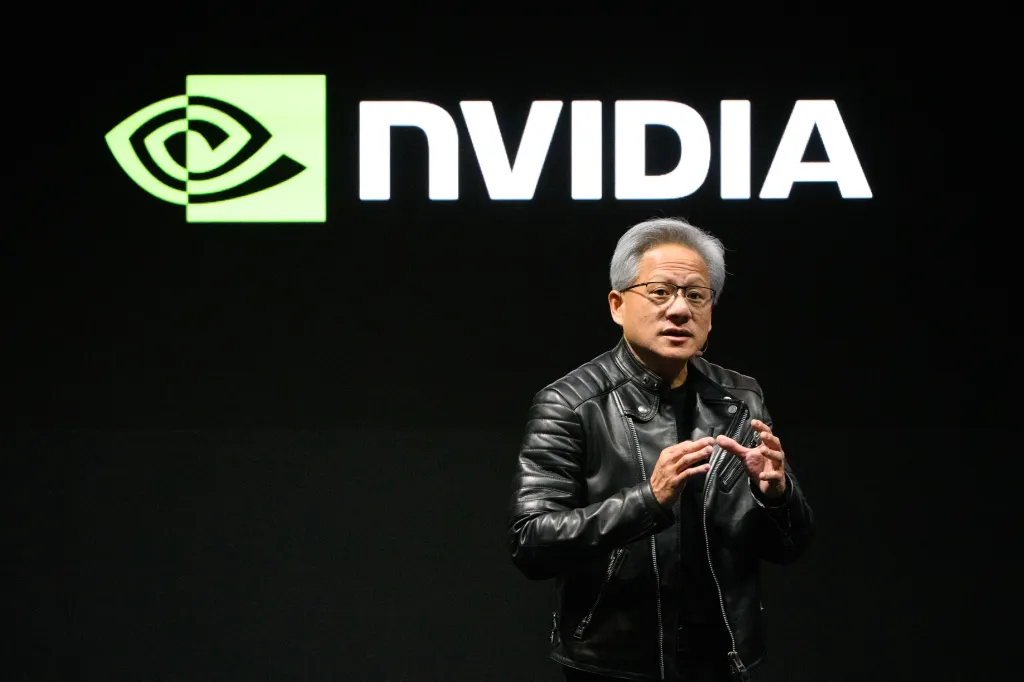
Nvidia has become one of the most influential companies in the global technology industry. Its chips power the AI revolution, its partnerships shape the computing ecosystem, and its CEO, Jensen Huang, has become one of the most recognisable figures in technology.
But an unexpected leadership controversy is now raising a question that every founder, investor and board member should take seriously:
What happens when a company’s biggest strength, its founder, also becomes its biggest governance risk?
In November 2026, Nvidia found itself dealing with a serious corporate governance controversy after reports raised concerns about CEO Jensen Huang’s personal associations and a potential foreign intelligence operation. The company’s board announced an independent investigation, bringing questions about leadership accountability, board independence and succession planning into focus.
This is bigger than one executive or one company. It highlights a challenge that growing startups often overlook: building a company that can operate responsibly even when its founder is at the centre of a crisis.
For founders, Nvidia’s situation offers important lessons about corporate governance, investor confidence and the risks of founder dependency.
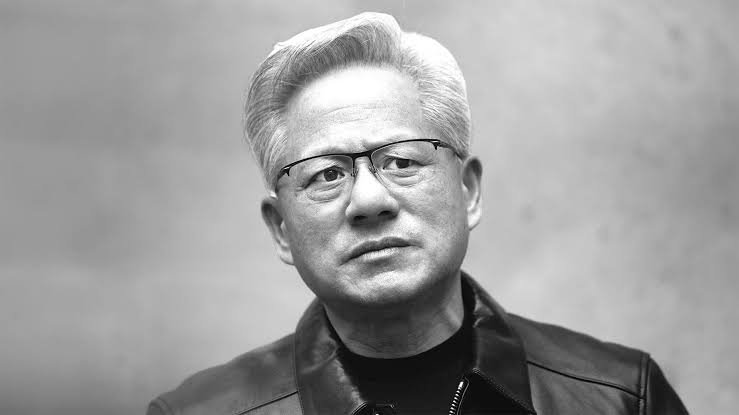
What happened? Nvidia’s board launches an independent investigation
The controversy involves Jensen Huang, Nvidia’s co founder and CEO, and his reported relationship with Alice Huang, a former executive at Singapore based Megaspeed.
According to reporting cited by Reuters, US authorities reportedly viewed Alice Huang as a Chinese intelligence asset. Megaspeed has also faced scrutiny over concerns involving access to Nvidia’s advanced AI chips.
The situation has attracted attention because Nvidia operates at the centre of the US and China technology rivalry, particularly around advanced semiconductor exports.
There are several important developments:
- November 8: Nvidia’s board announced an independent investigation into reports that Huang had been targeted by a foreign intelligence effort.
- Independent oversight: The investigation is being overseen by independent directors with outside legal assistance.
- November 9: A proposed shareholder class action lawsuit was filed against Nvidia and Huang, alleging that investors were misled.
- November 11: Reuters reported that the investigation had engaged the law firm Wachtell, Lipton, Rosen & Katz.
Nvidia’s board has explicitly stated that it has no reason to believe national security or company secrets were compromised. Huang has committed to cooperating with the investigation. Statement from NVIDIA Board of Directors+2
An important distinction: the reported intelligence connection has not been independently verified by Reuters. Huang has not been accused of criminal wrongdoing in this matter, and the shareholder lawsuit contains allegations that have not been proven in court.
Company background: How Nvidia became an AI infrastructure giant
Nvidia was founded in 1993 by Jensen Huang, Chris Malachowsky and Curtis Priem.
Initially, the company focused on graphics processing technology for computers and gaming.
Over time, Nvidia transformed its GPU technology into a platform for accelerated computing, scientific research, data centres and artificial intelligence.
Its importance increased dramatically as AI models became more computationally demanding.
Today, Nvidia operates across several major business areas:
- Data centre GPUs and AI computing systems.
- Gaming graphics cards.
- Networking and high performance computing.
- Automotive computing platforms.
- Software and developer infrastructure, including CUDA.
Its business is no longer simply about selling graphics cards. It provides an integrated computing ecosystem that businesses use to develop and operate AI systems.
This is what makes the current governance situation particularly important. Nvidia’s leadership decisions can affect a company with enormous influence over the global AI infrastructure market.
Business model: Why leadership stability matters to Nvidia’s commercial success
Nvidia generates revenue primarily through selling computing hardware, networking products, software and related platforms.
Its data centre business is particularly important because cloud providers, AI laboratories and large enterprises depend on its technology to train and operate advanced AI systems.
Its commercial advantage comes from combining hardware with a mature software ecosystem.
However, there is another important business asset that receives less attention: customer and investor confidence in leadership.
Large customers make long term infrastructure decisions. Investors evaluate whether management can execute its strategy consistently. Employees depend on leadership to establish priorities and maintain organisational stability.
A governance crisis can therefore create uncertainty even when the underlying products remain competitive.
This is an analytical risk, not evidence that Nvidia’s customers are currently abandoning its products.
The real governance problem: Founder dependency
Perhaps the most interesting part of this story is not the investigation itself. It is the questions it raises about Nvidia’s dependence on Jensen Huang.
Huang has led Nvidia since its founding in 1993. His leadership has been central to the company’s transformation from a graphics chip manufacturer into a global AI infrastructure powerhouse.
But long term founder leadership can create a difficult organisational balance.
A founder who understands the company better than almost anyone else can become an extraordinary competitive advantage. At the same time, if too many important decisions depend on one person, the company becomes vulnerable when that person is unavailable or faces a crisis.
Recent reporting by The New York Times has highlighted concerns about Nvidia’s succession planning, the board’s long relationships with Huang and the company’s leadership structure.
The report also noted that several directors have served alongside Huang for decades.
Nvidia’s 2026 proxy statement provides useful context: its board includes an independent lead director, but some directors have served since the company’s early years. Its governance disclosures also identify Huang’s two children as Nvidia employees, with their compensation determined under the company’s stated employee compensation practices.