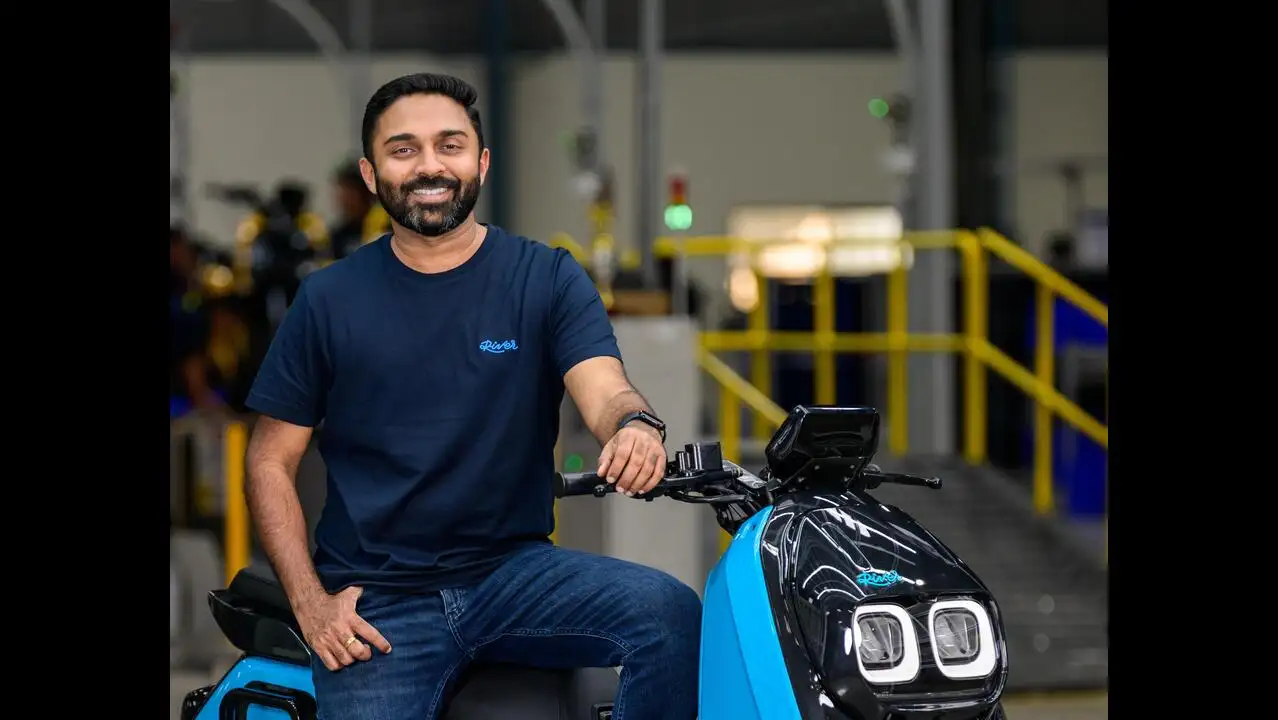
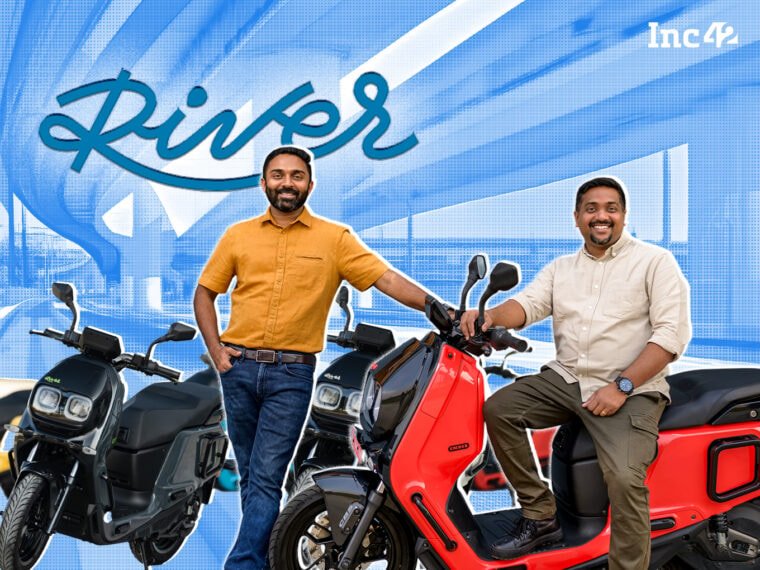
Imagine building a startup in a market dominated by established automotive companies, convincing investors to fund a physical product, and then planning to grow from around 100 retail locations to 1,000. That is the challenge Bengaluru based River Mobility is taking on. Its strategy offers an important lesson for founders: sometimes the biggest opportunity is not to compete directly with market leaders, but to serve customers they have overlooked. And that lesson applies far beyond electric vehicles.
1. River Mobility is not trying to win a price war
River Mobility is building its business around a simple idea: a scooter can be both practical and desirable. Instead of treating electric scooters as basic transportation, the company developed its Indie model to combine everyday utility with lifestyle appeal. Its target customers include independent business owners, skilled workers, tradespeople, and others who depend on two wheelers for their livelihoods.
Think about an electrician carrying tools, a flower seller transporting supplies, or a small business owner making several deliveries each day. For these customers, a vehicle is not merely a purchase. It is a tool that affects their daily earnings. By understanding this difference, River is positioning its product around real customer needs rather than competing on price alone.
The founder takeaway: Before building a product, identify a customer group whose needs are not being met properly. A specific audience with a clear problem can be a stronger starting point than trying to appeal to everyone.
2. The expansion plan is ambitious, but execution matters more
River Mobility has outlined a plan to expand its retail network from more than 100 locations to 200 by March 2027, 400 by March 2028, and 1,000 by March 2030. It is also developing a second manufacturing facility in Karnataka after acquiring 55 acres of land from the state government. The first phase is expected to become operational by July 2027.
These plans reveal how a manufacturing startup thinks about growth. More retail locations can improve customer access, product visibility, and after sales support. Additional production capacity can help meet rising demand. But both require money, people, reliable suppliers, and strong operational systems.
For an early stage founder, the lesson is not to copy River’s expansion targets. It is to understand what must be true before expanding. If your first five locations are struggling with customer service or inventory, opening another 50 could multiply the problem rather than solve it.
The founder takeaway: Scale only when your business has evidence that its existing model works. Measure customer demand, repeat purchases, service quality, and unit economics before committing to expansion.
3. The right customer can be more valuable than the biggest market
River’s approach also challenges a common startup assumption: that a company must target the broadest possible audience to become successful. The Indian two wheeler market is enormous, but River has differentiated itself by focusing on customers who need their vehicles to do more.
This is a useful lesson for founders across industries. A software startup does not necessarily need to serve every small business. A fintech company does not need to target every consumer. An AI startup does not need to build a general purpose tool when one industry has a costly, recurring problem.
For example, an AI company serving independent retailers might focus on inventory forecasting before attempting to automate an entire business. A logistics startup might begin with one underserved city or one type of delivery instead of launching nationwide.
The founder takeaway: Choose a customer segment you can understand deeply. A smaller market where customers urgently need your solution can provide a clearer route to early revenue and stronger product feedback.
At Tepi AI, we help founders discover startup funding, grants, accelerators, incubators, startup competitions, and emerging technology opportunities. Visit https://tepiai.com to explore opportunities that can help turn your startup idea into a scalable business.