

She has spent more than 18 years building Nvidia’s healthcare business. Now, Kimberly Powell has become a central figure in one of the biggest leadership controversies surrounding the world’s most valuable AI chipmaker.
Nvidia is known for its powerful GPUs, AI infrastructure and its larger-than-life CEO, Jensen Huang. But a new report has brought attention to another executive inside the company: Kimberly Powell, Nvidia’s vice president of healthcare.
On November 11, The New York Times reported that Huang had an alleged extramarital relationship with Powell, an executive who reportedly reports directly to him. The report cited five people who had worked at Nvidia.
The story has attracted significant attention because it comes as Nvidia’s board is already investigating a separate controversy involving Huang and a former executive at a Singapore-based technology company.
But who exactly is Kimberly Powell? What does she do at Nvidia? And why has a report about her relationship with the company’s CEO become a corporate governance issue?
Here’s what we know.
1. Who is Kimberly Powell?
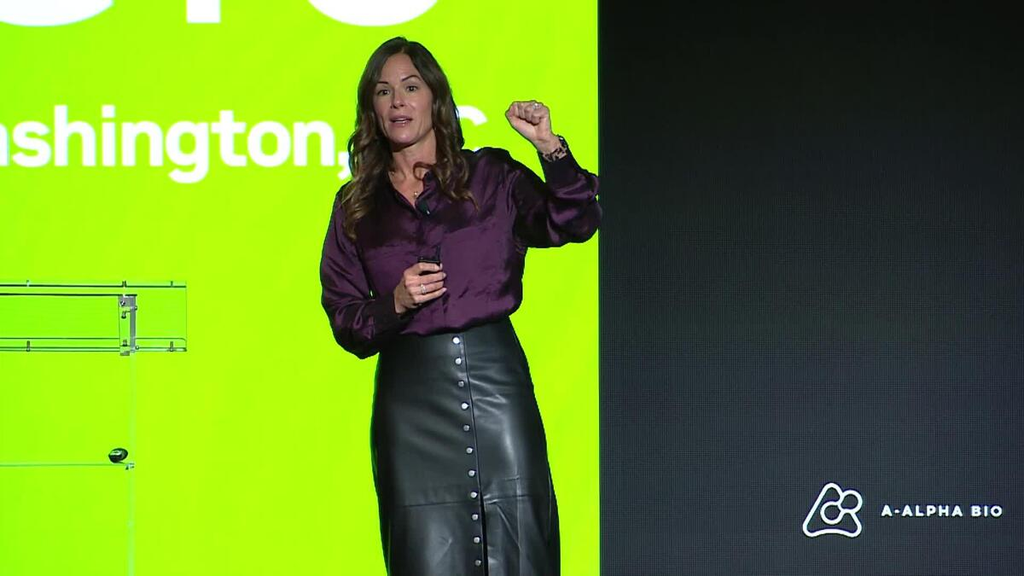
Kimberly Powell is Nvidia’s vice president and general manager of healthcare, responsible for the company’s global healthcare business.
She is a technology executive with a background in electrical and computer engineering, product development and medical imaging.
Unlike executives who joined Nvidia during its recent AI boom, Powell has been part of the company for more than 18 years.
She joined Nvidia in 2008 and has gradually moved into senior leadership positions.
Her work has focused on bringing GPU computing, artificial intelligence and accelerated computing into healthcare, medical imaging, life sciences and drug discovery.
Today, she is one of the company’s prominent representatives in the healthcare technology industry.
2. Her career before Nvidia

Powell’s career began in the medical imaging industry.
According to her professional background, she worked at DOME Imaging Systems as a hardware engineer, developing technology connected to medical imaging and radiology.
She later joined Planar Systems, where she worked on diagnostic imaging display systems and product management.
These roles gave her experience in the intersection of hardware engineering, medical technology and commercial product development.
That experience would eventually become important to her career at Nvidia.
3. How she built Nvidia’s healthcare business
Powell joined Nvidia in May 2008 as a director of worldwide business development for higher education and healthcare.
Her initial responsibility was to help establish Nvidia’s GPUs as an important computing platform for medical imaging equipment.
At the time, Nvidia was primarily recognised for graphics processors used in computers and gaming. Healthcare represented an opportunity to apply the company’s computing technology to a completely different industry.
Her work involved developing partnerships with universities, research institutions, healthcare companies and medical technology businesses.
Over time, the opportunity expanded beyond medical imaging.
AI and accelerated computing began transforming areas such as medical research, biological modelling, drug discovery and healthcare analytics.
Powell moved into a more senior AI business development role in 2016, leading strategic partnerships and initiatives focused on deep learning and data analytics.
In October 2017, she became Nvidia’s vice president of healthcare.
Her responsibilities expanded to cover the company’s worldwide healthcare business.
4. What does Kimberly Powell actually do at Nvidia?

Powell oversees Nvidia’s healthcare business, which connects the company’s computing platforms with healthcare and life sciences applications.
This is an important business area because AI is increasingly being used to analyse medical images, study biological systems, accelerate drug discovery and support scientific research.
Some of the areas connected to Nvidia’s healthcare strategy include:
Medical imaging: AI and accelerated computing can help healthcare technology companies process and analyse medical images.
Drug discovery: AI models can support researchers studying proteins, molecules and biological interactions.
Digital biology: Computing platforms can help scientists simulate and analyse complex biological systems.
Healthcare analytics: AI can help organisations extract insights from large volumes of healthcare data.
Research partnerships: Nvidia works with universities, startups, pharmaceutical companies and technology providers developing healthcare applications.
Powell’s role therefore goes beyond managing a conventional business division. She represents Nvidia in an industry where AI could create major technological and commercial opportunities.
5. What exactly did the report about Jensen Huang say?
On November 11, The New York Times reported that Huang had an extramarital relationship with Powell, who reportedly reports directly to him.
The report cited five people who had worked at Nvidia.
According to the newspaper, two sources said Huang and Powell were seen being affectionate at a hotel in San Jose, California, during Nvidia’s GTC developer conference in March 2026.
The Times said it had not seen the video reportedly recorded by a bystander.
The report also said that three people briefed on the incident claimed Huang’s security team intervened after noticing the person recording the interaction and offered the individual a non-disclosure agreement.
These details remain attributed claims. The newspaper’s reporting does not independently establish every aspect of the alleged incident.
When asked about his relationship with Powell by the Times, Huang reportedly responded, “I don’t think you should be talking to me directly,” before ending the call.
Nvidia declined to comment, while Powell did not immediately respond to a request for comment.
Neither Huang nor Powell has publicly confirmed the reported relationship in the coverage available at the time of publication.
6. Why does the reported relationship matter for Nvidia?
The most important issue is not simply whether two people in a company had a personal relationship.
It is the reported professional reporting structure.
Powell is described as an executive who reports directly to Huang, making the situation potentially relevant to corporate governance and workplace policies.
Nvidia’s code of conduct tells employees to avoid situations where personal relationships create conflicts of interest. It also says the company investigates reports of misconduct.
Many large companies have policies addressing relationships between managers and employees who report to them.
Such policies are designed to protect workplace fairness, prevent conflicts of interest and ensure that professional decisions are not influenced by personal relationships.
The key questions for Nvidia include:
- Was the reported relationship disclosed to the appropriate people?
- Did the company’s policies require any changes to the reporting structure?
- Were compensation, promotion or performance decisions affected?
- Did the board or human resources leadership know about it?
- Were company policies applied consistently?
A reported relationship does not automatically establish a policy violation. That would depend on the company’s actual rules, the facts and any findings from an investigation.
7. How does this connect to the separate investigation involving Alice Huang?

The Kimberly Powell report is separate from the earlier controversy involving Alice Huang, a former executive at Singapore-based chip company Megaspeed.
Earlier reporting alleged that US authorities suspected Alice Huang of having connections to Chinese intelligence activities.
The reports also raised questions about Megaspeed’s access to Nvidia’s advanced AI chips and possible efforts to obtain restricted chips for Chinese customers.
Jensen Huang acknowledged being unfaithful to his wife in a message to Nvidia employees on November 8.
Following the reports, Nvidia’s board announced an independent investigation into whether its CEO had been targeted by a foreign intelligence effort.
The board said it had no reason to believe that Nvidia’s confidential information or national security information had been compromised.
The two controversies should not be confused:
- Alice Huang: The earlier controversy involves reported foreign intelligence concerns and potential national security implications.
- Kimberly Powell: The newer report concerns an alleged personal relationship with a senior Nvidia executive who reportedly reports directly to Huang.
The second report raises different questions about executive conduct, workplace relationships and corporate governance.
8. What happens next?
Kimberly Powell’s professional position and Nvidia’s response will be important developments to watch.
Several questions remain unanswered:
- Will Powell or Nvidia publicly respond to the allegations?
- Will the board’s independent investigation examine the reported relationship?
- Will Nvidia review the reporting structure between Huang and Powell?
- Could the controversy result in changes to executive responsibilities?
- Will the company provide further information about its governance policies?
There is currently no confirmed announcement that Powell has been removed from her position or that Huang has resigned.
The company will need to balance employee privacy, fair investigation procedures and shareholders’ legitimate interest in corporate governance.
Final thoughts: A healthcare executive has become part of Nvidia’s biggest leadership story
Kimberly Powell’s career at Nvidia is significant independently of the controversy surrounding her reported relationship with Jensen Huang.
She joined the company in 2008, helped expand its healthcare and higher education business, moved into AI-focused business development and eventually became the executive responsible for Nvidia’s global healthcare operations.
Her professional story reflects how Nvidia expanded from graphics processors into healthcare, life sciences and AI-powered research.
But the latest reporting has placed her at the centre of a much larger corporate discussion.
For Nvidia, the questions now extend beyond personal relationships. They involve executive accountability, workplace governance, board oversight and the company’s ability to maintain confidence during a period of leadership uncertainty.
The bigger story is not just who Kimberly Powell is. It is how one of Nvidia’s most important business leaders has become part of a controversy that could test the company’s governance at the highest level.
Editorial note: This article is based on reporting available as of November 12, 2026. The alleged relationship has not been publicly confirmed by Jensen Huang, Kimberly Powell or Nvidia. Details about the reported hotel incident are attributed to sources cited by The New York Times; the newspaper said it had not seen the alleged video.
Read More: https://tepiai.com/jensen-huangs-nvidia-scandal-just-got-bigger-is-the-ai-giant-facing-a-leadership-crisis/