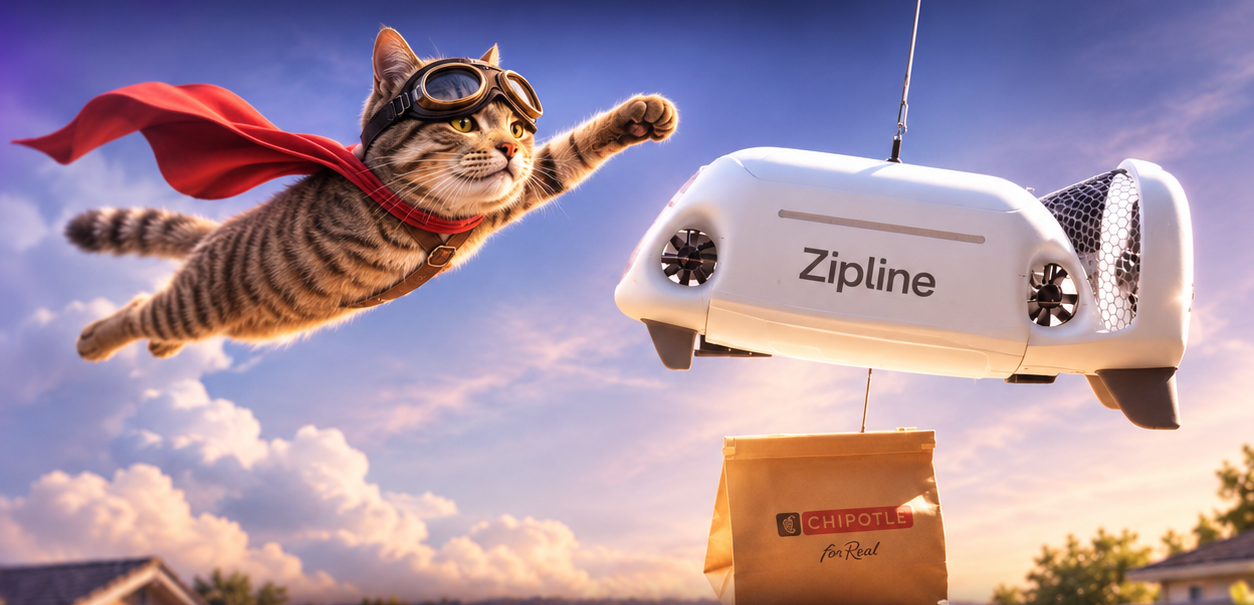
Forget waiting for a delivery partner stuck in traffic. Zipline wants to bring your food, groceries, and essential supplies straight from the sky. And investors are betting billions that this idea could become mainstream.
Drone delivery startup Zipline has raised $1.5 billion in a new funding round, reaching a $21.5 billion post-money valuation. That’s nearly three times its earlier $7.6 billion valuation.
The funding is a major milestone for a company that started by delivering blood and medical supplies in Africa and is now building a much bigger autonomous delivery network.
But this isn’t just another startup raising a massive round. Zipline is trying to change how the world moves physical goods.
From delivering blood in Rwanda to a $21.5 billion startup
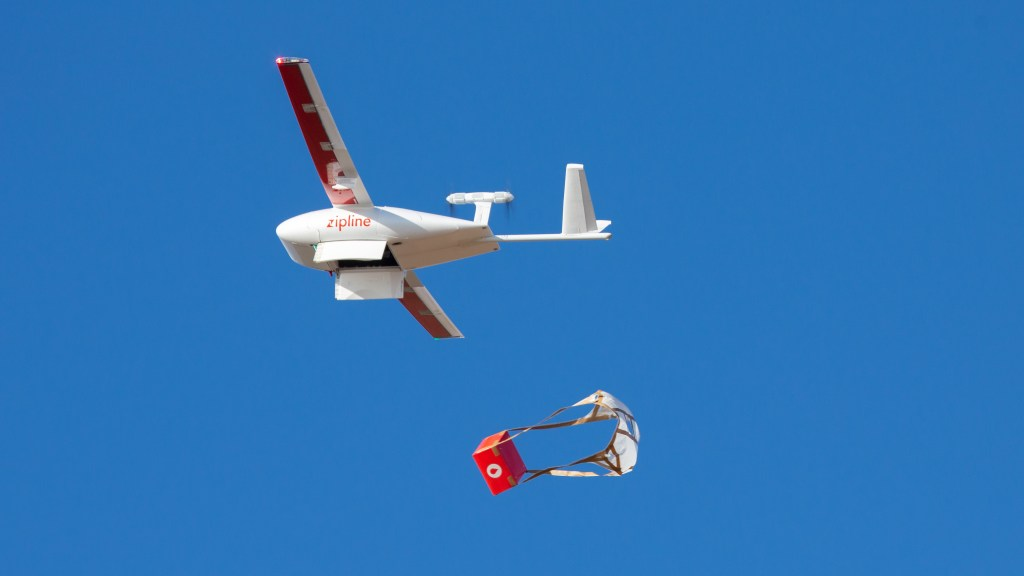
Founded in 2014, Zipline began with a mission to solve a serious logistics problem: getting essential medical supplies to places where traditional transportation was slow or unreliable.
Its autonomous drones helped deliver blood, vaccines, and medical products to hospitals and health facilities in countries including Rwanda and Ghana.
The company has since expanded into consumer deliveries, including food, retail products, and agricultural supplies.
Its technology now operates across four continents, making Zipline one of the most prominent players in autonomous drone logistics.
The bigger ambition is to make deliveries faster, more reliable, and less dependent on roads.
Who invested $1.5 billion in Zipline?
The latest funding round was led by Paradigm, WCM Investment Management, and Layer Global.
Other participating investors include:
- Uber
- Tiger Global
- J.P. Morgan
- Fidelity Management & Research Company
- ARK Invest
- Salesforce Ventures
- Valor Equity Partners
The company plans to use the new capital to expand its US manufacturing capacity, hire more employees, and build a nationwide drone delivery network.
The $21.5 billion post-money valuation represents a significant jump from the $7.6 billion valuation it reached earlier this year.
Walmart and Uber are betting on drone delivery
One of the biggest signs that Zipline’s business is moving beyond experimentation is its growing partnerships with major companies.
In August 2026, Zipline partnered with Uber to bring autonomous drone deliveries to Uber Eats customers.
Walmart has also expanded its relationship with the company. The two businesses announced a new multi-year agreement to add 300 drone delivery sites across the United States, significantly expanding their existing partnership.
These deals matter because drone delivery needs more than impressive technology. It needs customers, repeat orders, physical infrastructure, and businesses willing to integrate the service into their operations.
With Walmart and Uber involved, Zipline has access to established distribution networks and large customer bases.
How does Zipline’s drone delivery actually work?
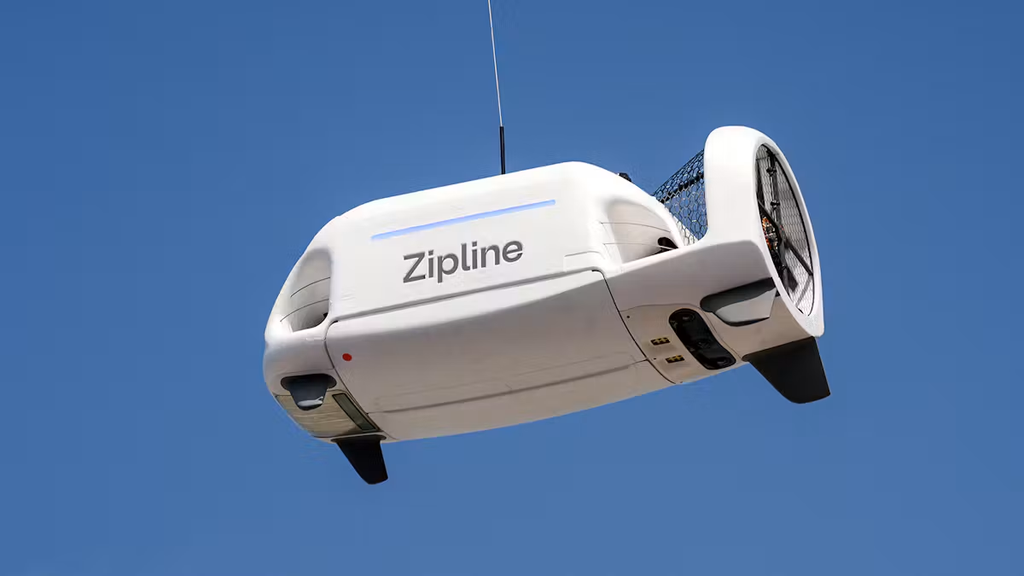
Zipline has developed its own aircraft, launch and landing systems, and logistics software.
Its delivery technology includes two main platforms:
Platform 1: Designed for longer-distance deliveries, including healthcare, enterprise, and government logistics. It can cover around 120 miles on a round trip.
Platform 2: Designed for shorter-range home deliveries. These drones can carry packages weighing up to eight pounds and serve customers within roughly a 10-mile radius.
The idea is simple: instead of sending a vehicle through traffic, autonomous aircraft can travel directly to delivery locations.
For customers, that could mean receiving essential products in minutes rather than waiting for conventional delivery.
The competition is getting serious
Zipline isn’t alone in trying to make drone delivery a mainstream business.
Alphabet’s Wing is expanding its autonomous delivery operations, while Amazon is investing in its own drone delivery network. DoorDash is also exploring drone-based delivery.
Amazon has plans to expand its service from 11 locations to approximately 500 US locations by the end of 2026, according to Reuters.
The competition is no longer just about who can build the best drone. It is about who can create the most reliable delivery network at scale.
The biggest challenges are still ahead
Despite the huge valuation, drone delivery has some difficult problems to solve.
Regulations: Commercial drone operations face aviation restrictions, especially when aircraft need to fly beyond the operator’s visual line of sight.
Safety: Companies must demonstrate that autonomous aircraft can operate reliably around people, buildings, and other aircraft.
Noise and public acceptance: Communities may not welcome large numbers of drones flying over residential areas.
Economics: Manufacturing aircraft, maintaining infrastructure, and operating delivery networks at scale can be expensive.
Zipline will need to prove that its service can become commercially sustainable while expanding into new markets.
What founders can learn from Zipline
Zipline’s journey offers an important lesson for entrepreneurs: some of the biggest opportunities come from solving problems that existing industries have struggled with for decades.
The company didn’t begin by trying to build a futuristic consumer gadget. It started with a clear logistical problem: hospitals needed critical supplies faster.
It developed the technology, built the infrastructure, established real-world operations, and gradually expanded into new markets.
That is what makes its story interesting. The company is not just selling drones. It is building an entirely new delivery infrastructure.
Zipline’s $21.5 billion valuation is a huge bet on a future where delivery doesn’t always need roads. And if the company succeeds, the next time you order something online, the delivery person might not be on a motorcycle. It might be flying above your house.
Source: Reuters, November 5, 2026. Additional reporting: TechCrunch.