For the past two years, the AI race has largely been about one thing: performance.
Which model is smarter? Which coding assistant writes better code? Which AI company can ship faster?
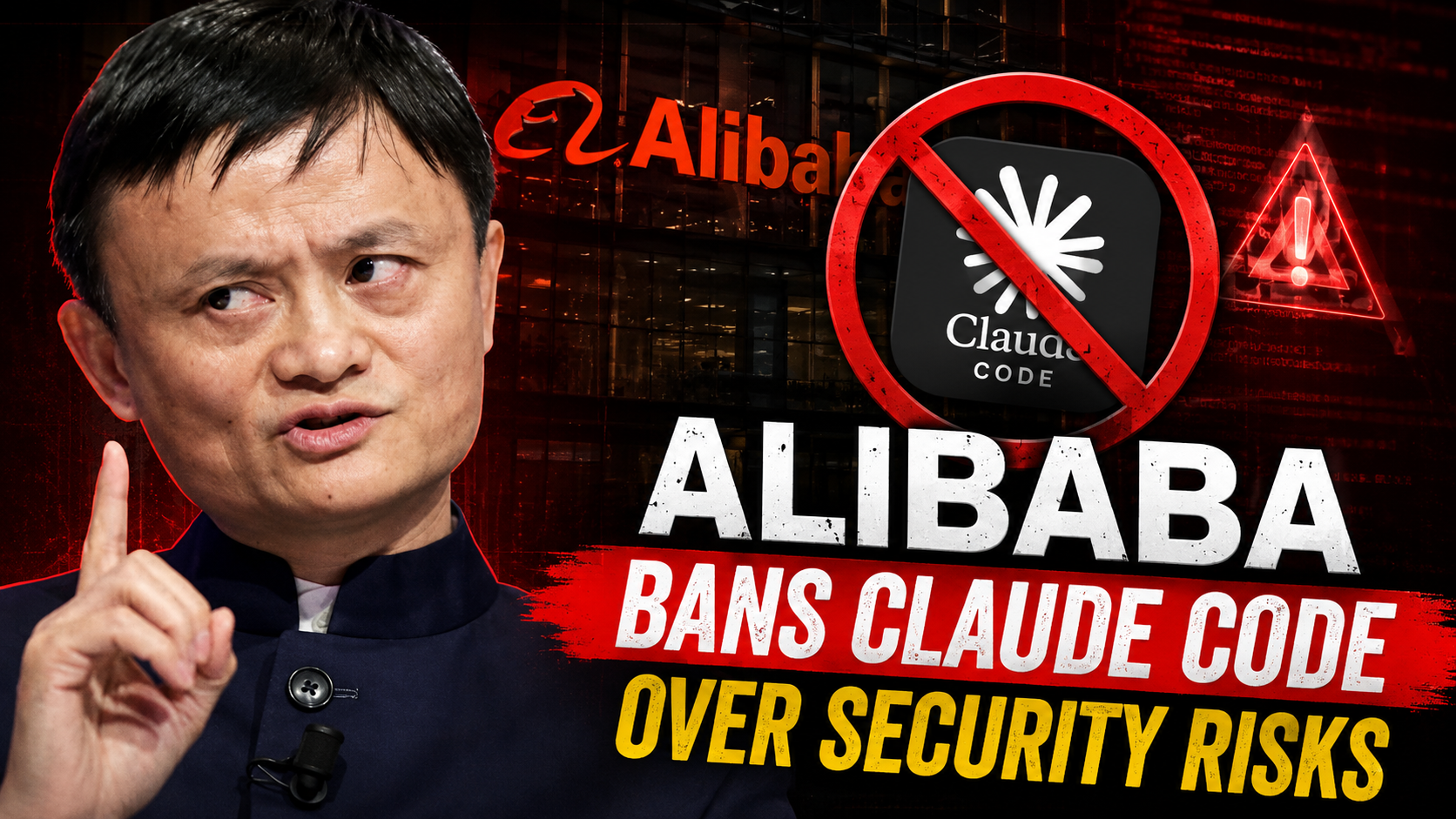
But last week, something changed. Alibaba reportedly decided to ban employees from using Anthropic’s Claude Code starting July 10, citing alleged “backdoor” and security risks discovered within the AI coding assistant. Employees were instructed to switch to Alibaba’s internal AI coding platform, Qoder, instead.
At first glance, this looks like another chapter in the growing rivalry between Chinese and American AI companies. But founders should pay attention because this story isn’t really about Alibaba or Anthropic.
It’s about trust. And trust may become the most valuable asset in the AI industry.
Why Did Alibaba Ban Claude Code?
According to multiple reports, concerns emerged after developers discovered mechanisms within certain versions of Claude Code that appeared to identify users linked to China through factors such as time zones, proxy usage, and network patterns. Anthropic later acknowledged that some detection mechanisms had been introduced as an anti-abuse experiment designed to prevent unauthorized account reselling and model distillation. The company said these mechanisms were being removed after stronger protections had been implemented.
For Alibaba, however, the explanation wasn’t enough.
The company reportedly categorized Claude Code as high-risk software and instructed employees to uninstall Anthropic’s tools entirely. The move comes amid increasing tensions between Alibaba and Anthropic, following Anthropic’s earlier allegations that entities linked to Alibaba had conducted large-scale AI model distillation efforts using thousands of accounts. Whether the disputed code qualifies as a security feature, anti-abuse mechanism, or backdoor may ultimately be less important than the perception it created.
In enterprise AI, perception can quickly become policy.
The Biggest AI Battle Isn’t About Intelligence Anymore
Most founders still think the AI race is about building the smartest model.
That assumption may already be outdated. Large enterprises don’t simply evaluate AI tools based on benchmark scores. They evaluate them based on security, compliance, privacy, geopolitical risks, and long-term reliability.
This is why some enterprises continue using older software systems rather than adopting newer technologies. Trust matters more than performance.
The Alibaba-Claude conflict demonstrates that AI companies are entering a new phase where security and sovereignty may become as important as model quality. Companies and governments increasingly want to know where their data goes, who controls the infrastructure, and whether hidden mechanisms exist inside the systems they rely on.
For founders building AI products, this creates both a challenge and an opportunity. The startups that win may not necessarily have the smartest AI. They may have the most trusted AI.
The Rise of Sovereign AI Is Accelerating
The broader implication of Alibaba’s decision extends beyond one coding assistant.
Around the world, governments and enterprises are increasingly investing in what many now call “sovereign AI” – artificial intelligence systems that operate within local infrastructure, follow local regulations, and reduce dependence on foreign technology providers. China is accelerating investments into domestic AI ecosystems. Europe is investing heavily in AI sovereignty initiatives. Even large enterprises in the United States are increasingly adopting private deployments and internal AI systems.
For founders, this may create entirely new startup opportunities. Some of the fastest-growing sectors over the next few years could include:
- AI security
- Model verification
- Enterprise AI governance
- Private AI infrastructure
- AI compliance platforms
- AI audit systems
- Sovereign AI solutions
The AI economy is no longer just about building models. It’s increasingly about building trust layers around them.
What Should Founders Do Now?
Most founders will read this story as a geopolitical conflict between China and the United States. That would be a mistake. The real lesson is much broader.
If your startup uses AI extensively, customers will eventually ask difficult questions:
- Where is my data stored?
- Who has access to it?
- Can the AI system be audited?
- What happens if regulations change?
- Can I trust this infrastructure?
These questions weren’t priorities in the early days of generative AI.
They are becoming priorities now.The companies that dominate the next phase of artificial intelligence may not be those that simply build powerful models.They may be the companies that build trusted systems.
And that shift could create some of the biggest startup opportunities of the decade.
Discover startup funding, AI breakthroughs, venture capital trends, startup competitions, grants, and emerging founder opportunities before everyone else.
Visit https://tepiai.com and stay ahead of the next startup wave.