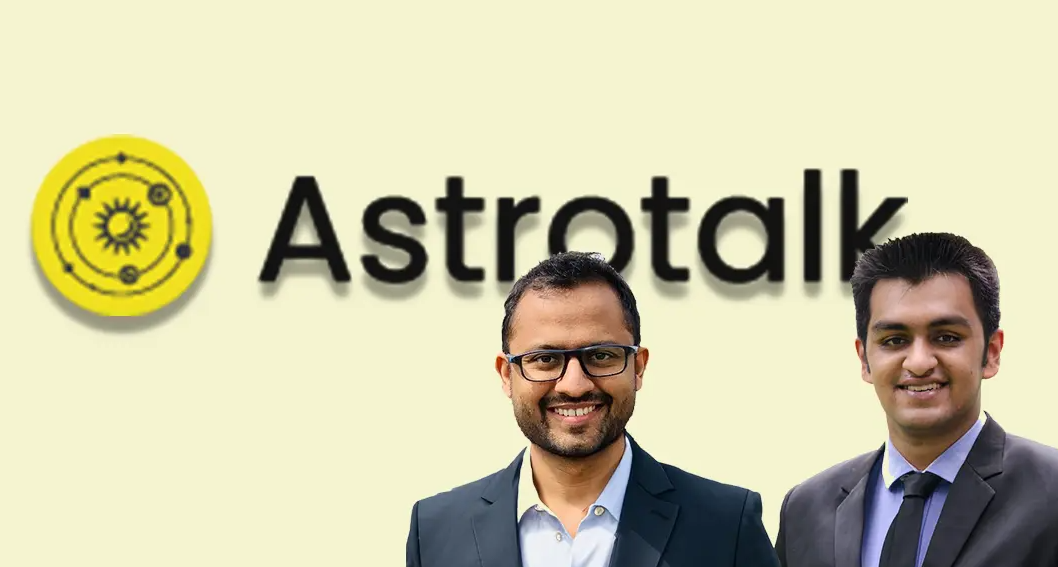
India has a new unicorn, and this time the milestone comes from an unusual corner of the startup ecosystem. Astrology-tech platform Astrotalk has reached a $1 billion valuation, making it one of India’s newest unicorn startups after an ESOP buyback helped unlock liquidity for employees.
The company, founded by Puneet Gupta and Anmol Jain in 2017, has built a large online platform connecting users with astrologers and other spiritual service providers. Its latest valuation shows how far India’s consumer internet market has expanded beyond traditional categories such as fintech, ecommerce and SaaS. Astrotalk had previously raised capital from investors including Left Lane Capital and Elev8 Capital.
From Astrology Platform to $1 Billion Startup
Astrotalk’s growth is closely tied to India’s shift from offline services to digital platforms. Instead of relying only on local astrologers, users can now discover professionals, book consultations and communicate through an app.
The company has also expanded beyond its core consultation business. Earlier company updates highlighted plans around international expansion, new business verticals and a larger leadership team. Astrotalk has previously reported strong revenue growth, with its FY25 revenue reaching around ₹1,176 crore, up from ₹651 crore in FY24.
That scale matters because the unicorn valuation is not simply a bet on the idea of online astrology. It reflects the size of the consumer base, repeat usage and the company’s ability to turn a traditionally fragmented service into a technology-driven marketplace.
Why the ESOP Buyback Matters
The most interesting part of this milestone may actually be the ESOP buyback.

Employee stock options are often a major part of compensation at startups, but they can remain “paper wealth” for years if there is no IPO, acquisition or secondary transaction. A buyback gives employees a chance to convert part of that equity into real liquidity. Astrotalk had already indicated plans for an ESOP buyback as part of its growth journey. Its unicorn milestone now highlights another trend across India’s startup ecosystem: secondary transactions and employee liquidity are becoming increasingly important as startups mature.
For founders, this is an important reminder. ESOPs are not just a hiring tool. A well-designed employee equity program can become a meaningful part of a company’s long-term talent strategy.
What Founders Should Take From Astrotalk
Astrotalk’s journey also shows that unicorn opportunities can emerge in categories that traditional technology investors may once have overlooked.
The company took a familiar offline behaviour and built technology around discovery, payments, communication and access. That is a useful pattern for founders: the opportunity does not always come from inventing a completely new behaviour. Sometimes it comes from digitising an existing market at scale.
The company’s growth also shows why founders should look beyond the first version of their business model. Astrotalk has explored international markets and additional services while continuing to strengthen its core platform. Earlier funding plans also focused on strategic acquisitions, new verticals and senior hiring.
India’s Unicorn Ecosystem Is Expanding
Astrotalk’s $1 billion valuation adds another unexpected name to India’s growing unicorn ecosystem.
More importantly, its journey shows how India’s startup market is evolving. Consumer platforms are finding large digital markets in categories that were once highly fragmented, while ESOP buybacks are giving employees more opportunities to participate in the value they help create. For founders, the lesson is simple: a large startup opportunity can exist wherever technology makes an old market easier to access, scale and monetize.
Astrotalk did not need to invent a new human need. It built a technology business around an existing one. That may be the more interesting story behind India’s newest unicorn.
For more startup funding, AI, founder stories and opportunities across India’s startup ecosystem, explore Tepi AI.
-Written by Shubham Singla