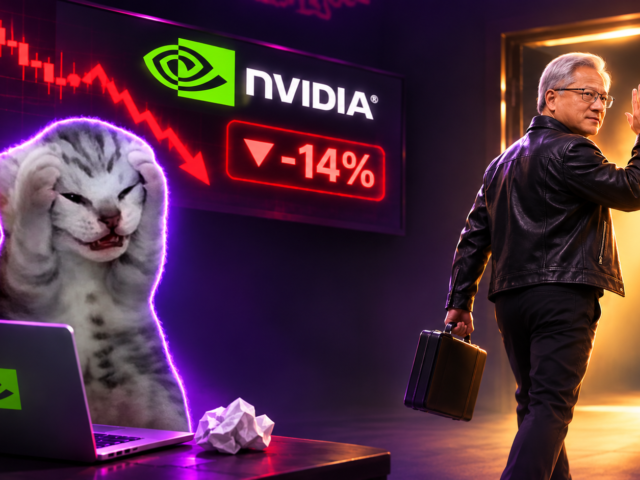
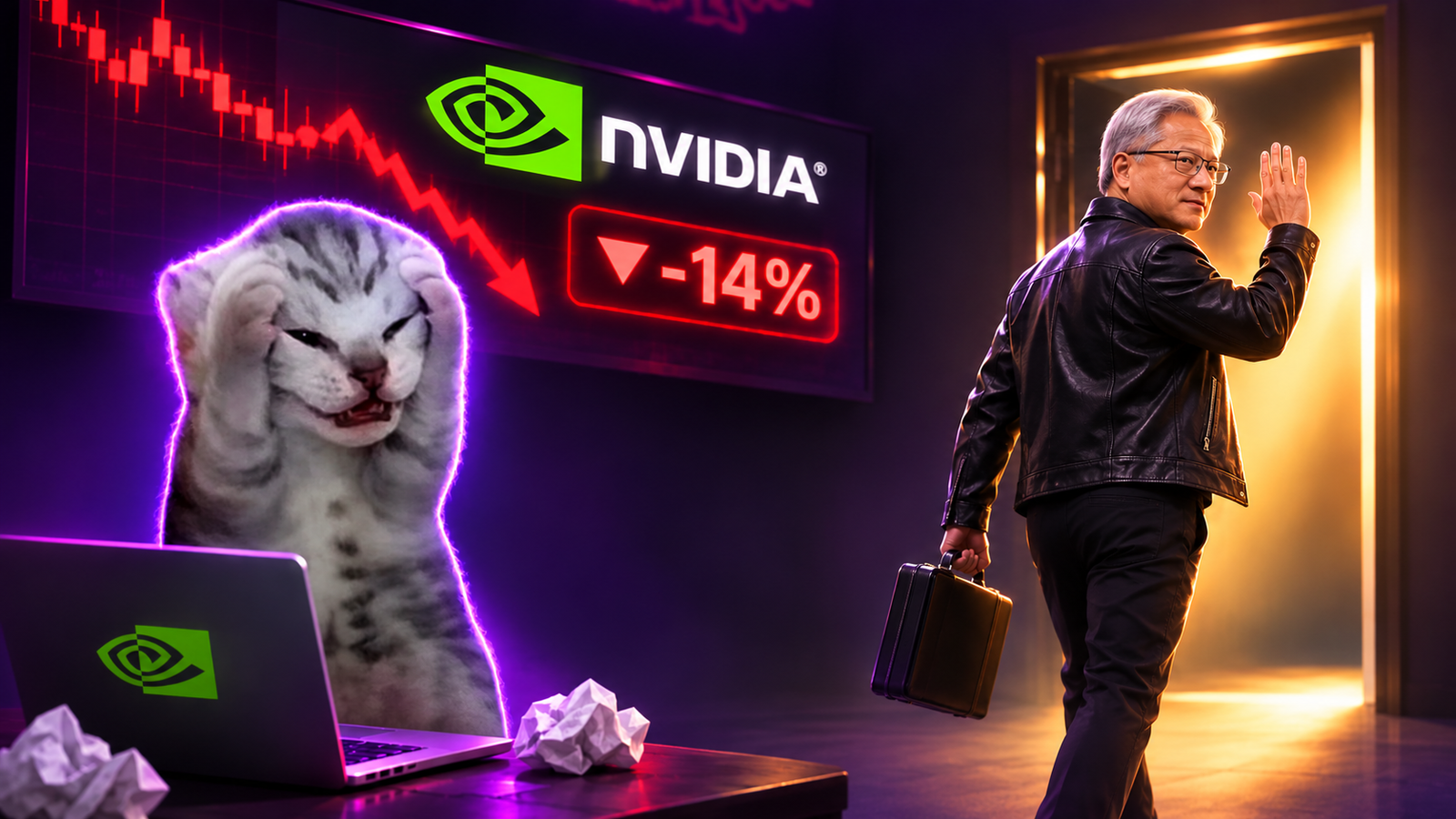
The man who built Nvidia into an AI powerhouse is stepping down. And Wall Street is wasting no time reacting.
In a stunning development, Nvidia co-founder and CEO Jensen Huang has resigned with immediate effect, ending more than 33 years at the helm of the company.
Nvidia confirmed the announcement on November 12, 2026. Its CFO, Colette Kress, has been appointed interim CEO while the board searches for a permanent replacement.
The announcement follows weeks of controversy involving Huang’s admitted extramarital affair, reports of a second alleged relationship with a senior Nvidia executive, and an investigation into whether he was targeted by a foreign intelligence operation.
The market reaction was immediate. Nvidia shares plunged approximately 14% on Thursday, according to the Associated Press, putting pressure on the wider technology sector.
Why Jensen Huang’s exit matters so much

Huang was not just Nvidia’s CEO. He was the face of its transformation from a graphics chipmaker into the company powering much of the global AI infrastructure boom.
Founded in 1993, Nvidia became a central supplier of GPUs used by AI developers, cloud companies and data-centre operators.
His departure creates three major concerns for investors:
- Leadership uncertainty: Huang was deeply involved in Nvidia’s strategy, product direction and relationships with major customers. The company has not yet named a permanent successor.
- Execution risk: Investors will want reassurance that Nvidia’s product roadmap, customer commitments and operations will continue without disruption.
- Geopolitical scrutiny: The investigation surrounding reported links to a suspected foreign intelligence effort could keep export controls and national security questions in focus.
The board has appointed Harvey C. Jones as Nvidia’s first-ever chair. It says the company’s operations, customer commitments and product roadmap are expected to continue without interruption.
Can Colette Kress stabilise Nvidia?

Colette Kress has served as Nvidia’s CFO since September 2013. She will temporarily hold both the CEO and CFO roles while the board considers internal and external candidates.
Her advantage is familiarity with Nvidia’s finances, customers and operations. However, leading the financial organisation is different from replacing a founder who has shaped the company’s technology strategy and public identity for three decades.
Investors will be watching whether Kress can maintain confidence among employees, customers, partners and shareholders.
What happens to Nvidia stock now?
Nvidia’s sharp decline reflects a sudden reassessment of leadership risk. But it does not automatically mean that demand for its AI chips has disappeared.
Three developments could influence the stock from here:
1. The succession decision: A credible permanent CEO appointment could help reduce uncertainty. A prolonged search could keep pressure on the shares.
2. The investigation: Investors need clarity on whether any company information or national security interests were compromised. Nvidia’s board previously said it had no reason to believe either had been compromised.
3. Earnings and AI demand: Nvidia is still scheduled to report its third-quarter fiscal 2027 results on November 17. Revenue, guidance and commentary on customer demand will be important indicators of the underlying business.
Meanwhile, competitors such as AMD and Broadcom could attract greater attention from investors and customers looking to diversify their AI chip supply. Chinese chipmakers may also see an opportunity if geopolitical restrictions and uncertainty change the competitive landscape.
Final verdict: Nvidia has lost its founder, but has it lost its AI advantage?
Jensen Huang’s resignation marks one of the biggest leadership changes in modern technology. His departure introduces uncertainty at a company whose identity and strategy have been closely tied to its founder.
But Nvidia still has its chip technology, CUDA software ecosystem, engineering teams, customers and established position in AI infrastructure.
The real test is whether those strengths can continue delivering growth under new leadership.
For investors, the next few days will be critical. The appointment of a permanent CEO, the outcome of the investigation and Nvidia’s upcoming earnings could shape the market’s response.
Nvidia built the AI era with Jensen Huang at the helm. Now it must prove that the AI revolution can continue without him.
This article is for informational purposes and is not investment advice. Stock prices are volatile, and past performance does not guarantee future returns.
Sources: Nvidia official announcement, November 12, 2026; Reuters; Associated Press; The Guardian.