
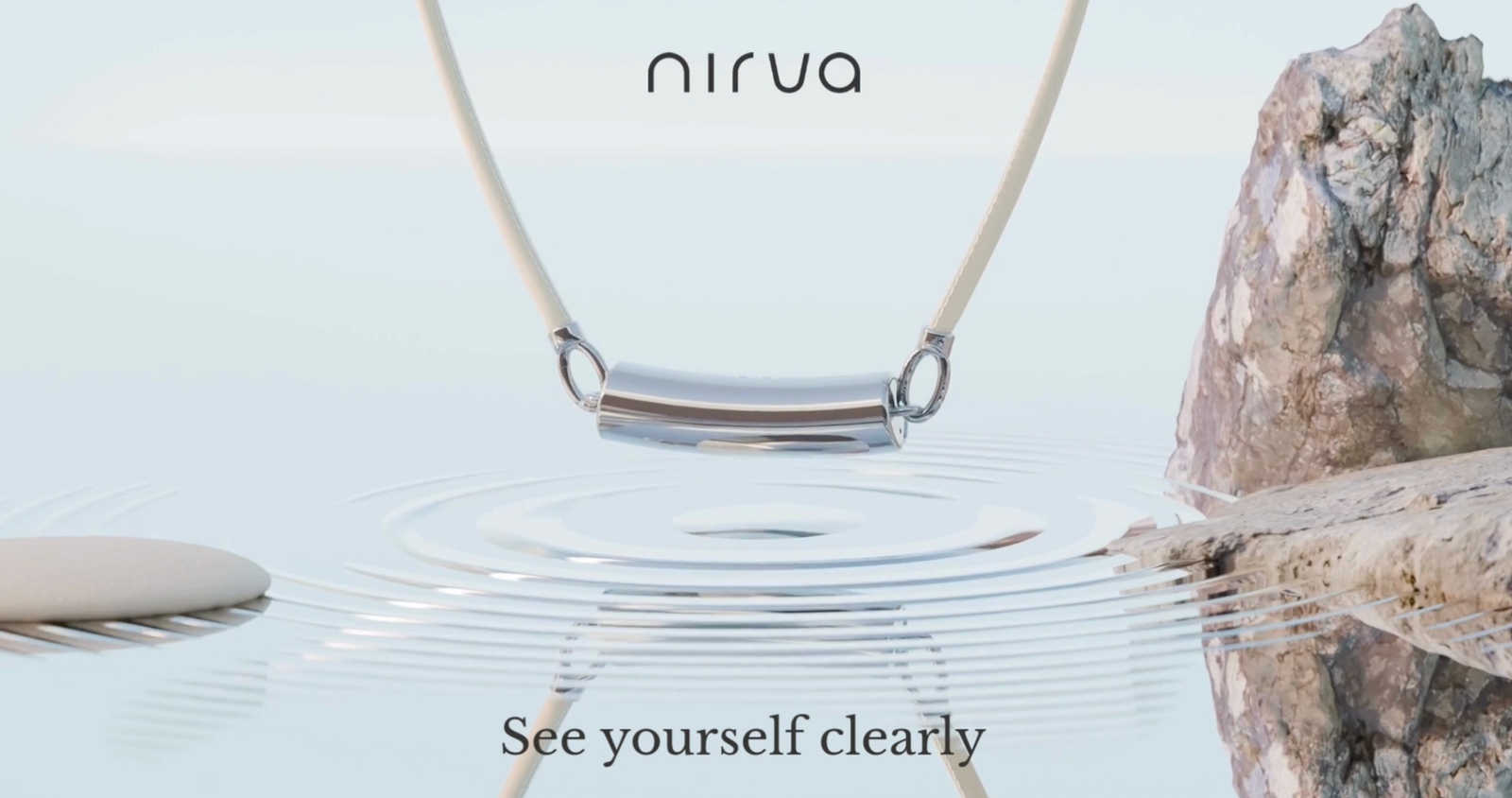
What if an AI assistant could understand your day without asking you to open an app, type a prompt or record a voice note? That’s the idea behind Nirva, a startup building an AI-powered pendant designed to listen to its wearer and turn everyday conversations into personal insights.
The company has now raised $33 million in total funding, including a new $25 million pre-Series A round. Its goal is to make AI feel less like another app on your phone and more like a personal companion that quietly learns from your daily life.
What Is Nirva’s AI Pendant?
Nirva’s first product is a small wearable device that looks like a piece of jewellery. It can be worn as a pendant or bracelet and weighs around eight grams, according to the company’s launch coverage.
Unlike traditional voice recorders, the Nirva AI pendant is designed to identify and focus on its owner’s speech. During setup, users provide voice samples that help the system distinguish their voice from conversations happening around them.
The device is designed to process speech patterns and derive insights without retaining raw audio or transcripts by default after processing. This approach is central to Nirva’s pitch: an always-available AI companion that focuses on the wearer rather than recording everyone nearby.
How Does Nirva Turn Your Voice Into Personal Insights?
Nirva’s companion app aims to do more than transcribe speech. It analyses patterns in the user’s voice, including tone, pitch, volume and speaking speed, to generate insights about emotions and communication style.
Over time, the company wants the experience to help users recognise recurring patterns in their daily lives. That could include reminders, personal reflections and observations about how they communicate or respond to different situations. The idea is to help people notice things they might otherwise forget. Instead of manually writing a journal every evening, users could receive a more continuous record of their experiences and reflections.
However, these insights should be treated as AI-generated interpretations, not definitive psychological assessments. Voice patterns alone cannot reliably explain every emotion, intention or relationship.
Privacy Is the Big Question

A wearable that listens throughout the day raises an obvious concern: what happens to conversations involving other people? Nirva says its system is designed to focus on the wearer’s voice and discard audio after processing by default. That is an important distinction from a device that simply records everything around it.
Still, voice filtering is not the same as eliminating every privacy risk. People may speak in noisy environments, share sensitive information or discuss matters involving others. Users will need clear information about how voice data is processed, what insights are stored and how they can control or delete their information.
For always-on AI devices to gain wider adoption, trust will matter just as much as convenience.
Why Did Nirva Raise $33 Million?
The funding gives Nirva more resources to develop its wearable and companion app as interest grows in AI devices that work beyond the smartphone.
The startup was founded by Wei Lyu and Jason Chen, former Meta Reality Labs employees, alongside Hanying Hu, who has a background in fashion and jewellery. The team’s approach combines wearable technology with a design intended to feel more like an everyday accessory than a conventional gadget.
Nirva plans to begin taking orders in November 2026, with early shipments targeted by the end of the year. The announced starting price is $249.
Is This the Future of Personal AI?
Nirva represents a different direction for consumer AI. Instead of waiting for people to open an app and ask a question, it aims to build context from everyday experiences and use that context to offer personal reflections. The opportunity is clear: people could spend less time documenting their lives and more time living them. But the challenges are equally real. The product will need to deliver genuinely useful insights, protect sensitive data and avoid making confident claims from incomplete information.
If Nirva can get that balance right, its pendant could become part of a broader shift toward ambient AI: technology that works quietly in the background instead of demanding constant attention.
For more updates on AI startups, emerging technology and the founders building what comes next, visit Tepi AI.
–Written By Shubham Singla

