
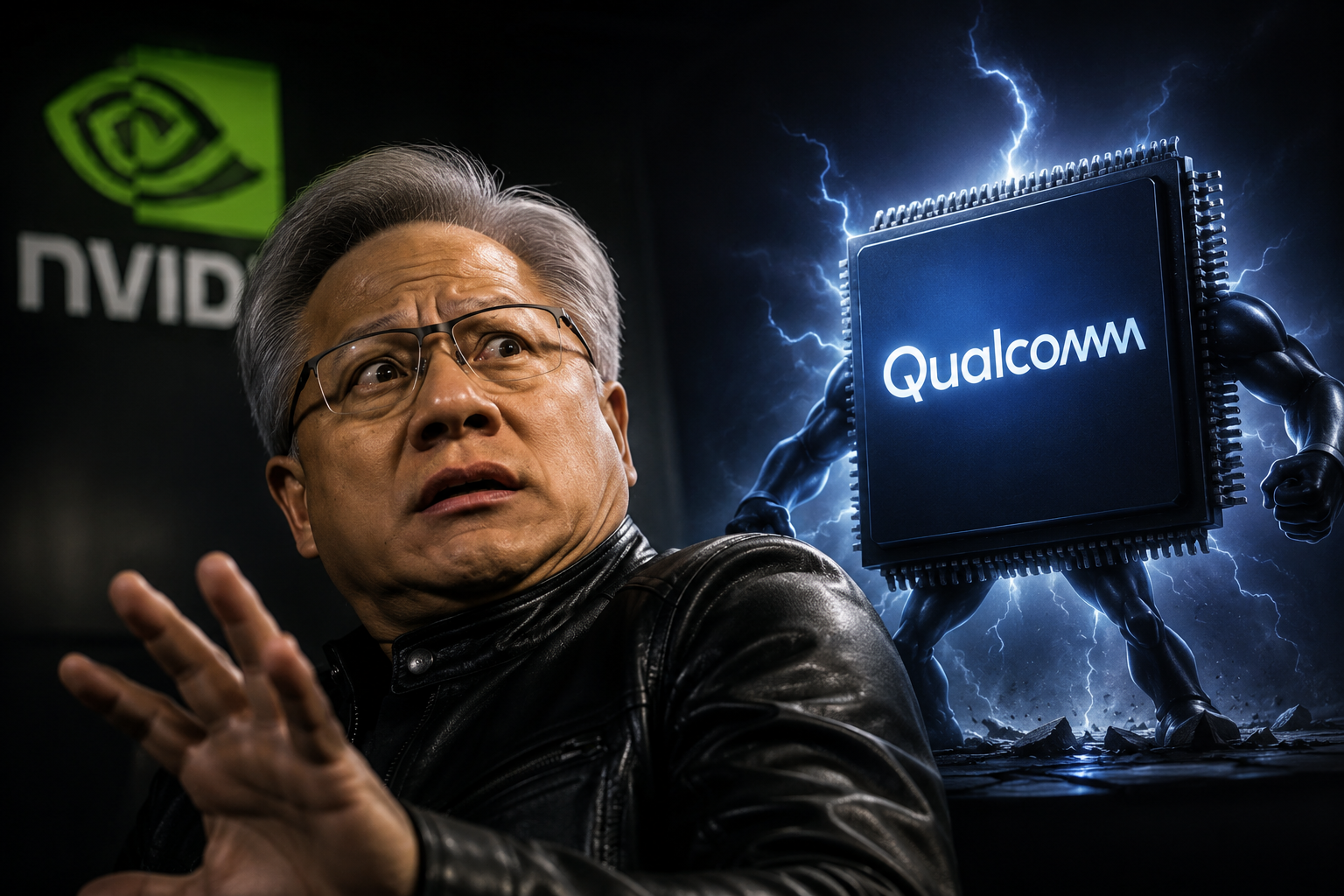
For the last few years, building AI products has meant living by one rule:
If Nvidia wins, everyone else waits.
Whether it was GPU shortages, soaring cloud costs, or limited access to cutting-edge hardware, startups often had little choice but to build around Nvidia’s ecosystem.
That may finally be changing.
At its recent Investor Day, Qualcomm doubled down on its AI data center ambitions, unveiling its Dragonfly C1000 CPU platform and custom AI chips. Even more importantly, companies like Meta are planning production deployments, while Microsoft has emerged as one of Qualcomm’s early customers. The company now expects its data center business to generate more than $15 billion in annual revenue by FY2029, forming a major part of its strategy to reduce dependence on smartphones.
For startup founders, this isn’t just another semiconductor announcement.
It’s a signal that the AI infrastructure market is entering a new phase.
The AI Chip Market Is No Longer a One-Company Story
For years, Nvidia has dominated AI infrastructure.
Its GPUs became the default choice for training and running large AI models, making it one of the world’s most valuable companies.
But dominance comes with challenges.
Startups have faced:
- High cloud computing costs
- Long waiting times for premium GPUs
- Vendor lock-in
- Limited flexibility when scaling AI applications
Qualcomm’s expansion into AI data centers introduces another serious player into the market.
More competition usually means better pricing, faster innovation, and more options for builders.
That’s good news for startups.
Why Meta and Microsoft’s Support Matters
Hardware announcements happen every month.
Customer adoption is what actually changes markets.
Meta planning to use Qualcomm’s chips in production and Microsoft’s early adoption suggest this isn’t an experimental project sitting in a lab.
Large technology companies don’t redesign infrastructure without strong technical and economic reasons.
Their participation gives Qualcomm credibility that many new AI hardware companies struggle to earn.
For founders, that’s a sign worth watching.
What This Means for AI Startups
If you’re building AI products, infrastructure choices directly affect your business.
More competition in AI hardware could lead to:
- Lower inference costs
- Better availability of AI compute
- Specialized chips for different workloads
- Reduced dependence on a single hardware vendor
- More cloud provider choices
This is particularly important for startups building:
- AI agents
- Robotics platforms
- Autonomous systems
- Enterprise AI applications
- Edge AI products
- AI infrastructure tools
As new chip architectures enter the market, founders can optimize for performance, power consumption, or cost instead of accepting one default solution.
Don’t Build Around One Vendor Forever
Many startups accidentally create technical lock-in.
Everything—from model optimization to deployment pipelines—is built around one hardware ecosystem.
That works until pricing changes.
Or supply becomes limited.
Or a better alternative appears.
Smart founders should start thinking about multi-vendor AI infrastructure.
Designing systems that can run across multiple hardware platforms gives startups:
- Greater resilience
- Better negotiating power
- Lower infrastructure costs
- Easier global scaling
The companies that prepare early won’t have to rebuild everything later.
The Bigger Trend Isn’t Qualcomm
The bigger story is competition.
AI infrastructure is becoming one of the fastest-growing industries in technology.
Nvidia, AMD, Qualcomm, Intel, Google, Amazon, Microsoft, and dozens of startups are all investing billions to power the next generation of AI.
That’s creating an environment where founders will have more choices than ever before.
And more choice almost always benefits startups.
The next wave of AI innovation won’t just come from better models.
It will come from cheaper, faster, and more accessible infrastructure that allows founders to build products that were previously too expensive to scale.
Stay Ahead of Startup & AI Trends
The biggest opportunities often appear long before they become mainstream.
At Tepi AI, we break down the AI, startup, funding, and technology stories that actually matter to founders—so you can make smarter decisions before everyone else catches on.
Explore more startup insights, grants, accelerators, and AI trends at https://tepiai.com.