
Key Takeaways
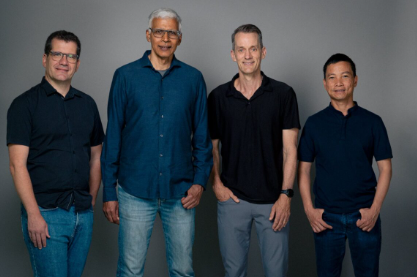
The Executive Departure: Google Chief Scientist Jeff Dean and senior researchers Sanjay Ghemawat, Oriol Vinyals, and Quoc Le have exited Google DeepMind after 27 years to co-found Discovery Loop.
The Technological Shift: Structured as a Public Benefit Corporation, Discovery Loop focuses on automated scientific discovery, replacing human-led trial and error with parallel, AI-driven experimental loops.
Capital & Infrastructure: The startup is backed by Khosla Ventures and Radical Ventures, with Alphabet retaining a minority equity stake and supplying dedicated compute resources.
Introduction
When the principal engineer behind MapReduce, Bigtable, TensorFlow, and Google Search infrastructure walks out the door after 27 years, the entire tech industry takes notice. Jeff Dean, Google’s 30th employee and Chief Scientist, has departed alongside artificial intelligence pioneers Sanjay Ghemawat, Oriol Vinyals, and Quoc Le to launch a new company called Discovery Loop. Their goal is not to launch another consumer chatbot or conversational assistant. Instead, they are building an engine designed to automate scientific research itself.
For startup founders, B2B tech leads, and software engineers, this migration signals a massive inflection point. The next frontier of venture capital and technical differentiation is shifting away from thin wrapper applications toward autonomous research loops that solve complex physical and computational challenges. Below is a detailed analysis of Jeff Dean’s exit, the mechanics of Discovery Loop, and the strategic decisions early-stage founders must make to remain competitive in an evolving AI landscape.
Why Did Google Chief Scientist Jeff Dean Leave After 27 Years to Launch a Startup?
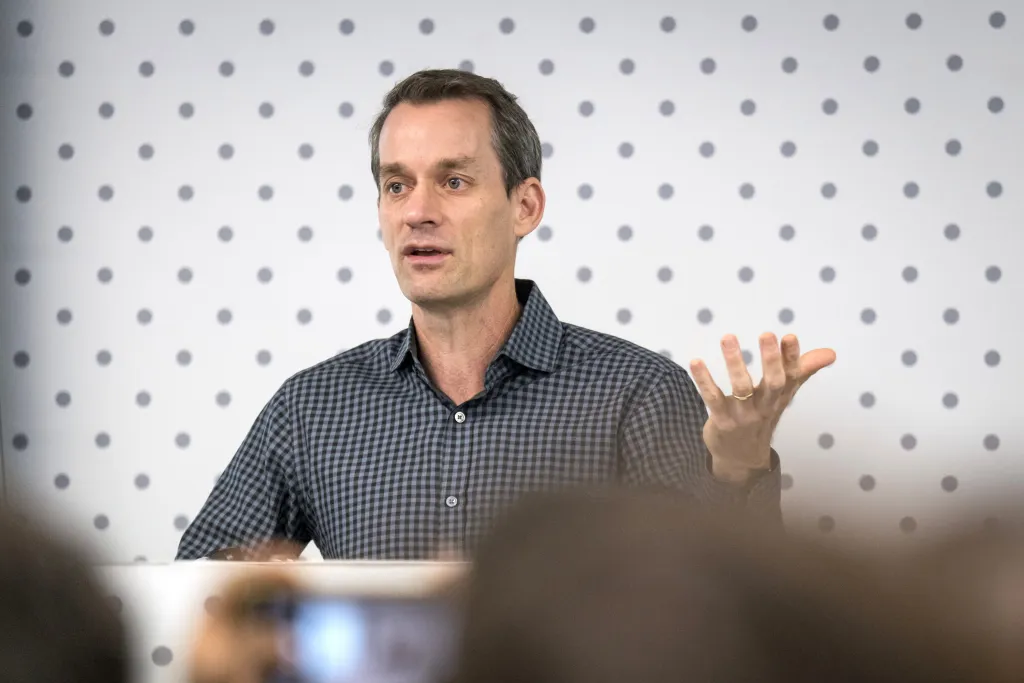
Jeff Dean joined Google in 1999, when the company operated out of a modest office with just 25 employees. Over nearly three decades, his contributions defined cloud computing and distributed systems. He co-created MapReduce and Bigtable, helped build Google Search’s crawling systems, co-founded Google Brain, and directed the development of TensorFlow.
Despite leading Google DeepMind as Chief Scientist, Dean felt that breakthrough scientific acceleration required a smaller, highly focused environment. Large technology conglomerates often face institutional friction, internal matrix management, and product monetization deadlines that can slow down fundamental research.
By launching a nimble venture, Dean and his team can focus exclusively on solving complex research bottlenecks. Their work targets high-impact challenges outlined in the National Academy of Engineering Grand Challenges, including clean energy, advanced materials, chip design, and therapeutic drug discovery.
To understand why investor capital is moving toward hard physical problems and scientific automation, read Tepi AI’s analysis on Why VCs Are Betting Billions on Physical AI Instead of Apps.
What Is Discovery Loop, and How Does It Plan to Automate Scientific Discovery?
Discovery Loop is registered as a Public Benefit Corporation (PBC), establishing a corporate structure that balances financial returns with broader public scientific progress.
Traditional research relies heavily on human-driven experiment cycles. A scientist formulates a hypothesis, designs an experiment, runs the test, analyzes the data, and manually iterates. This sequential approach creates an operational bottleneck in fields like biology, material science, and semiconductor design.
Discovery Loop replaces this linear pipeline with automated closed-loop experimentation. The software system proposes hypotheses, implements code or laboratory parameters, evaluates empirical results, and uses those outputs to dictate the next round of testing.
Rather than running one test at a time, Discovery Loop executes thousands of simulated experiments in parallel, drastically reducing the feedback cycle from months to hours.
Who Are the Co-Founders Joining Jeff Dean From Google DeepMind?
The technical team assembling at Discovery Loop represents decades of foundational machine learning breakthroughs:
- Jeff Dean: Former Chief Scientist at Google DeepMind and co-creator of TensorFlow, MapReduce, and Bigtable.
- Sanjay Ghemawat: Longtime Google Senior Fellow and co-author of core Google storage and indexing systems.
- Oriol Vinyals: Former Gemini co-lead and DeepMind VP of Research, key contributor to Sequence-to-Sequence learning and AlphaStar.
- Quoc Le: Pioneer in Neural Architecture Search (NAS) and co-founder of Google Brain.
Together, these four researchers helped establish the underlying architectures upon which modern cloud computing and large language models operate.
How Are Vinod Khosla and Google Backing the Discovery Loop Launch?
Building systems capable of running automated, multi-domain scientific experiments requires substantial capital and compute resources.
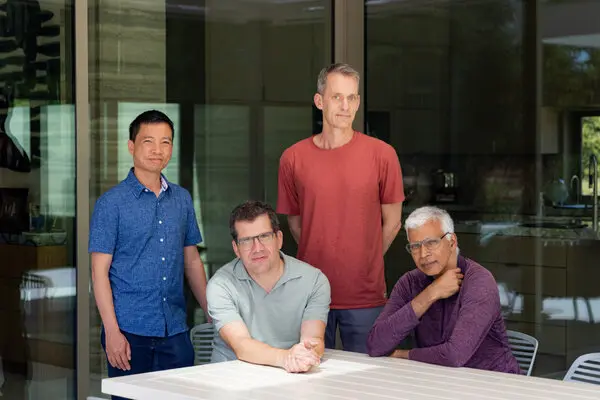
Discovery Loop launched with early funding co-led by Vinod Khosla at Khosla Ventures and Radical Ventures. Explaining his investment thesis, Khosla noted that most industry capital has historically gone toward using AI as an administrative assistant, whereas Discovery Loop uses AI directly as an autonomous scientist.
Alphabet CEO Sundar Pichai confirmed that Google is maintaining a corporate minority stake in Discovery Loop and providing dedicated Tensor Processing Unit (TPU) compute allocation during the startup’s first year.
This relationship allows Alphabet to retain strategic alignment with its former executives while giving Discovery Loop access to specialized hardware infrastructure.
For insights into tracking venture funding shifts before pitching investors, check out Why Smart Founders Track Funding Before They Raise.
What Does the Big Tech AI Talent Migration Mean for Early-Stage Founders?
The departure of top-tier AI researchers from established technology firms to early-stage ventures reflects broader trends across the technology ecosystem:
- 1. Talent Concentration in Smaller Teams: Experienced research talent is increasingly choosing focused, early-stage equity environments over mega-cap corporate salaries.
- 2. Institutional Capital Shift: Venture capital firms are directing larger investment checks into deeptech and scientific automation, moving away from consumer-facing prompt wrappers.
- 3. Strategic Corporate Alliances: Incumbents like Alphabet are using compute supply agreements and minority investments to maintain relationships with spinout companies.
Should AI Startups Pivot From Wrapper Applications to Autonomous Research Loops?
For software startups, competing directly on generic large language model performance is capital-intensive and increasingly commodity-driven.
Building sustainable differentiation requires moving beyond prompt interface wrappers toward verticalized feedback systems. Whether a company is building in healthcare, logistics, fintech, or software development, creating defensible software requires three core elements:
- Proprietary Data Collection: Capturing specialized empirical feedback that off-the-shelf foundation models cannot replicate.
- Automated Verification: Implementing objective scoring mechanisms to evaluate model outputs without constant human oversight.
- Continuous Fine-Tuning: Feeding verified experimental outcomes back into model weights to establish compounding performance advantages.
For strategic guidance on adapting your product strategy to major foundation model shifts, read Tepi AI’s guide on how Anthropic Just Changed How Smart Founders Should Build AI Startups.
Actionable Takeaways for Startup Founders
- Focus on Vertical Feedback Loops: Design your product architecture so that every user interaction generates verifiable data to refine underlying workflows.
- Prioritize Automated Evaluation: Build rigorous benchmarking environments into your application layer to score model outputs systematically.
- Leverage Founder Accelerator Networks: Early-stage builders seeking structured mentorship, technical co-founders, and early capital should review our breakdown on Antler Residency: Should Startup Founders Apply?.
- Explore Practical Startup Resources: For curated news, funding breakdowns, and ecosystem updates, explore Tepi AI’s Essential Insights for Founders and Startups.
Written by Arnav Bhardwaj