When SpaceX achieved a staggering $1.77 trillion valuation, the global startup ecosystem celebrated what many considered one of the most significant milestones in venture capital history. For founders, investors, and technology enthusiasts, it seemed like a confirmation that large-scale innovation still commands unprecedented value.
But the bigger story may have unfolded just days later.
SpaceX’s acquisition of AI coding startup Cursor for approximately $60 billion wasn’t merely another high-profile acquisition. It represented something much larger: a shift in how the world’s most valuable companies are being built, how venture capital firms are allocating capital, and how founders should think about creating the next generation of startups.
For years, startup advice has remained relatively unchanged. Build a product, acquire users, raise capital, scale operations, and eventually seek an acquisition or public offering. However, the events surrounding SpaceX and Cursor suggest that this traditional playbook may no longer be sufficient. The future may not belong to companies that simply build products. It may belong to companies that own ecosystems, control workflows, and become foundational infrastructure for entire industries.
For founders building today, this isn’t just another tech headline. It’s a glimpse into the future of entrepreneurship.
The Biggest Companies Are No Longer Staying in One Industry
For decades, startups operated within clearly defined categories. Companies identified themselves as SaaS businesses, fintech startups, healthcare companies, marketplaces, or enterprise software providers. Investors built portfolios around these categories, and founders built their identities around them. Today, those boundaries are beginning to disappear.
SpaceX itself serves as one of the strongest examples of this shift. While it started as a private space exploration company, its influence now extends far beyond aerospace. Through satellite communications, internet infrastructure, artificial intelligence initiatives, manufacturing capabilities, and software systems, SpaceX has evolved into a multi-industry technology ecosystem.
This pattern isn’t unique to SpaceX. Amazon began as an online bookstore before becoming a logistics giant, a cloud infrastructure leader, and now an AI powerhouse. Microsoft transitioned from operating systems to cloud computing, enterprise software, gaming, and artificial intelligence. NVIDIA transformed from a graphics card manufacturer into one of the most important AI infrastructure companies in the world.
The lesson for founders is significant. The next generation of billion-dollar startups may not emerge by dominating a single industry. Instead, they may emerge by connecting multiple industries and creating entirely new markets.
This means founders should stop asking, “What category does my startup fit into?” and begin asking, “What ecosystems can my startup create?”
Why Cursor Was Worth $60 Billion
At first glance, paying $60 billion for an AI coding assistant appears difficult to justify. Traditional startup valuation frameworks struggle to explain such a large acquisition. After all, software development tools have existed for decades. Hundreds of AI coding startups have emerged in recent years. Why would one company command such an extraordinary price? The answer lies in understanding how value is being created in the AI era.
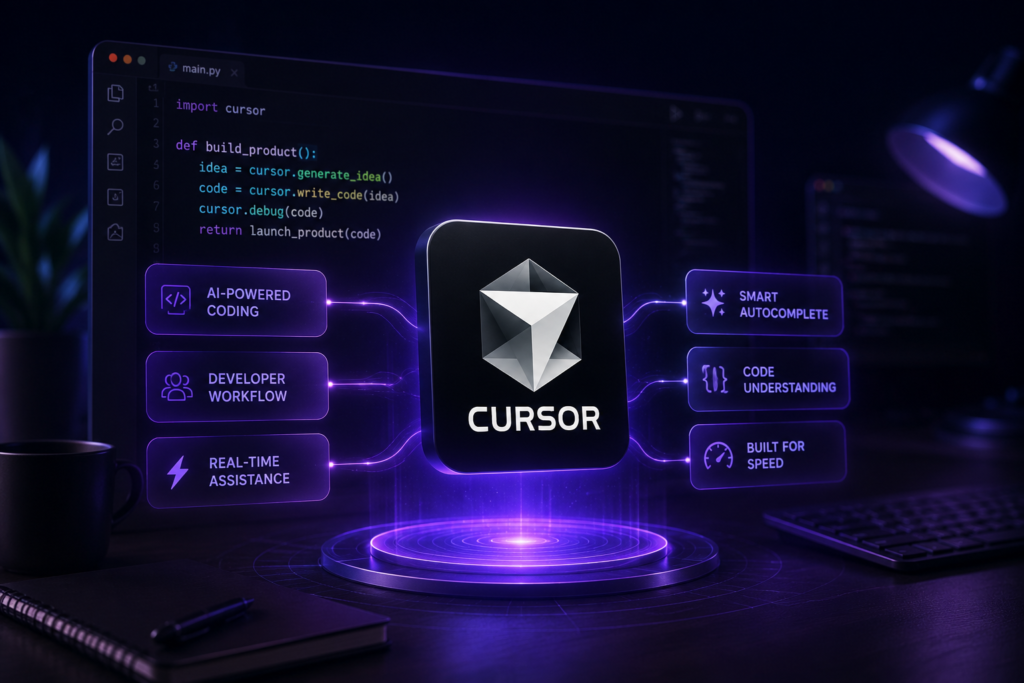
SpaceX likely wasn’t purchasing Cursor because of its current revenues or user numbers alone. It was purchasing something far more valuable: developer behavior and workflow ownership. Every day, millions of software developers rely on AI coding assistants to write code, debug applications, generate documentation, and accelerate software delivery. These interactions create enormous strategic advantages. They generate data, create user habits, establish dependencies, and build ecosystems that become increasingly difficult to replace.
In many ways, Cursor occupies a similar position to what Google achieved with search, what Microsoft achieved with enterprise productivity software, and what Stripe achieved with payments infrastructure.
The most valuable asset isn’t necessarily the technology itself. The most valuable asset is becoming embedded within the daily workflow of millions of users. This may be one of the biggest lessons founders can learn from the acquisition. In the coming decade, owning a workflow could become significantly more valuable than selling a feature.
Venture Capital Is Quietly Changing the Rules
Many founders continue to build companies using assumptions developed during the startup boom of 2020 and 2021. The strategy was straightforward: raise capital quickly, prioritize user growth, spend aggressively, and optimize profitability later. For a period of time, that strategy worked exceptionally well.
Today’s investment environment is fundamentally different.
Venture capital firms are increasingly concentrating capital into companies that demonstrate long-term strategic leverage rather than short-term growth. Investors are searching for businesses that can become platforms, ecosystems, or critical infrastructure layers within emerging markets. This explains why companies operating in artificial intelligence, developer infrastructure, robotics, climate technology, and space technology continue attracting significant investments despite broader economic uncertainty.
Investors are no longer simply asking whether a startup can become a large business. Instead, they’re asking whether a startup can become indispensable. This distinction changes how founders should think about product development, market positioning, and competitive advantages. Building a successful startup today may require creating systems that other businesses depend upon rather than simply offering a better version of an existing product.
The startups attracting the highest valuations are increasingly becoming infrastructure for entire ecosystems.
Artificial Intelligence Is Becoming Infrastructure, Not an Industry
One of the most important trends emerging from recent startup activity is that artificial intelligence is rapidly transitioning from a standalone industry into a foundational layer across every industry.
This transition resembles what happened with the internet. In the early days of the web, companies proudly called themselves “internet companies.” Today, nobody uses that term because the internet became a universal layer underlying nearly every business.
Artificial intelligence appears to be following the same path. The biggest opportunities may not come from building another AI application. Instead, they may come from applying AI to transform existing industries that have historically been difficult to disrupt. This creates enormous opportunities for founders operating at the intersection of multiple sectors. Some of the most promising areas include AI-powered healthcare systems, intelligent manufacturing, AI-enabled education platforms, financial automation, climate technology, legal technology, defense technology, and enterprise infrastructure.
The founders who create the next generation of market leaders may not identify themselves as AI founders at all. Instead, they will be founders who understand how to apply artificial intelligence to solve problems that existing systems cannot solve efficiently. The future of AI may not belong to companies that build the best models.
It may belong to companies that integrate those models into the most valuable workflows.
What Should Founders Do Now?
For most startup founders, a $1.77 trillion valuation and a $60 billion acquisition can feel distant and irrelevant. However, history suggests that major shifts in technology often begin at the highest levels of the market before eventually reshaping the entire startup ecosystem.
When Amazon launched AWS, few founders realized cloud computing would redefine startup economics. When smartphones emerged, few entrepreneurs predicted that mobile-first companies would dominate the next decade. Similarly, when generative AI models first appeared, many dismissed them as experimental tools.
Today, founders may be witnessing another transformation.
The companies creating the greatest value are increasingly controlling ecosystems rather than products. They are becoming infrastructure rather than applications. They are building networks rather than features.
As a founder, there are several important questions worth asking:
- Does my startup own a meaningful workflow?
- Am I building a product or creating an ecosystem?
- What strategic advantage becomes stronger as my company grows?
- How can AI enhance the value I create?
- Which industries can I connect that others are treating separately?
The most important lesson from the SpaceX and Cursor story isn’t about valuation.
It’s about vision.
The founders who build the next generation of extraordinary companies may not be those who build the best products. They may be the ones who understand where technology, capital, and human behavior intersect – and build there first.
Discover startup funding trends, AI breakthroughs, venture capital insights, startup competitions, grants, and emerging opportunities before everyone else.
Visit https://tepiai.com and stay ahead of the next startup wave.