
Almost every smartphone user has received that annoying spam call claiming to offer loans, credit cards, or investment opportunities.
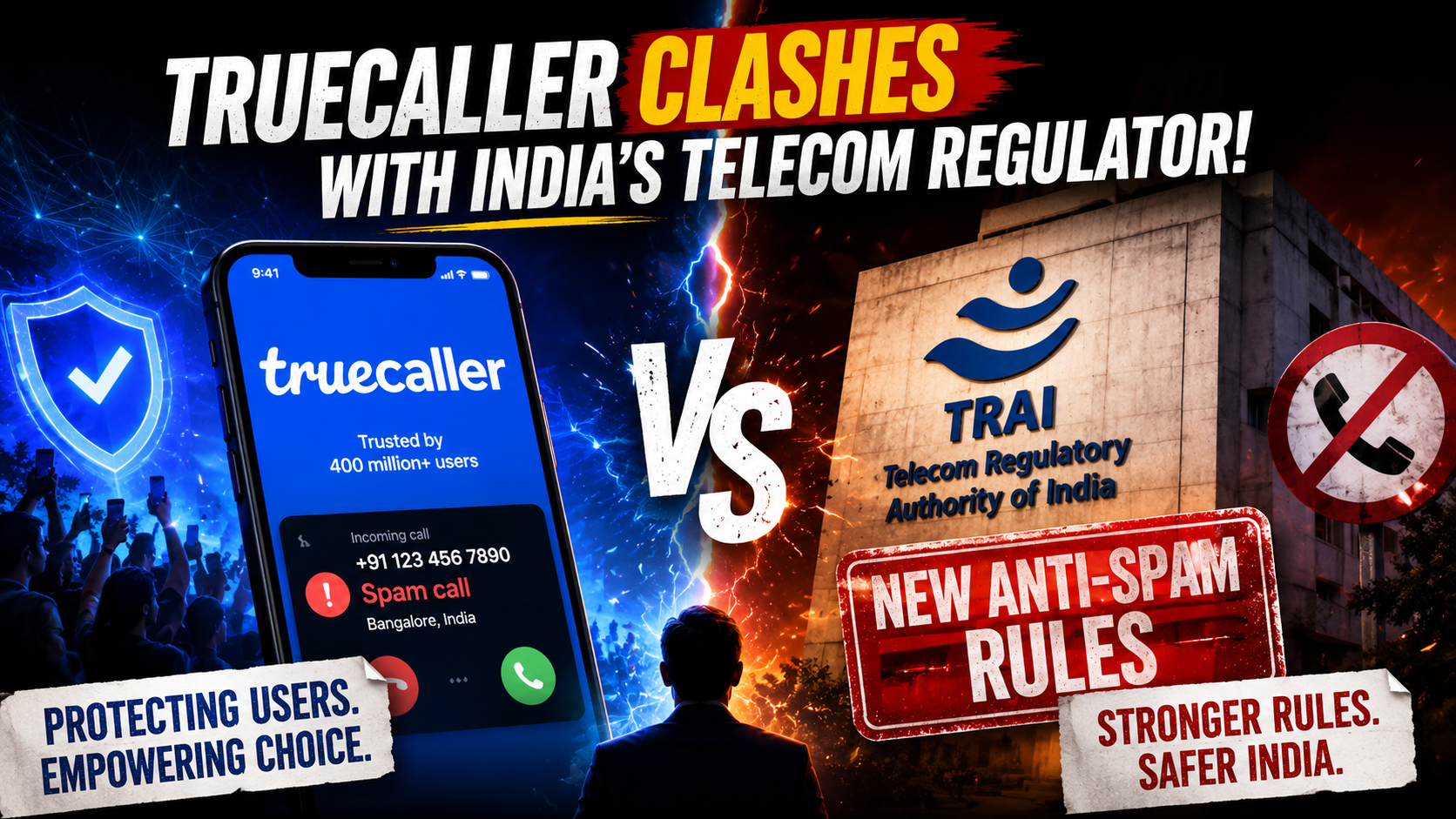
For years, apps like Truecaller have helped millions identify unknown callers before answering. But now, one of the world’s biggest caller identification platforms has found itself in a battle with India’s telecom regulator. Truecaller has publicly opposed new anti-spam regulations proposed by the Telecom Regulatory Authority of India (TRAI), arguing that the rules could affect how third-party caller identification services operate. Meanwhile, TRAI believes stronger measures are necessary to reduce spam calls and protect consumers.
At first glance, this looks like a disagreement between a regulator and a technology company. In reality, it’s a much bigger conversation about privacy, digital infrastructure, and who should control caller identity in the future.
Why Is Truecaller Opposing The New Rules?
TRAI is working on a framework that would allow telecom operators to display verified caller names directly through their own networks. The objective is simple: reduce fraud, spam calls, and scam attempts by giving users greater confidence about who is calling them.
Truecaller, however, believes this approach could reduce competition and limit the role of independent caller identification platforms. The company argues that innovation has largely come from technology companies rather than telecom operators, and restricting third-party participation may ultimately reduce consumer choice. The disagreement isn’t just about one app.
It’s about who should own one of the most important pieces of digital communication.
What Could Change For Users?
If telecom operators begin offering built-in caller identification across networks, users may no longer need separate apps for basic caller verification. That could improve user experience by making verified caller information available natively on smartphones.
However, independent platforms like Truecaller currently provide much more than caller names. They also offer spam detection, community reporting, AI-powered scam identification, business profiles, and fraud alerts built using years of user-generated data.
The challenge for regulators will be finding a balance between stronger consumer protection and maintaining a competitive ecosystem where innovation continues. This debate isn’t necessarily about replacing Truecaller.
It’s about redefining how caller identity works in the future.
Why This Matters For The Startup Ecosystem
Stories like this highlight an important reality for startups. Building a successful product is only one part of the journey. As companies grow and become essential infrastructure, they increasingly interact with governments, regulators, and public policy.
The rules can change. Sometimes those changes create new opportunities. Other times, they force companies to rethink their business models. Whether you’re building in AI, fintech, healthtech, logistics, or communications, regulation is becoming a competitive factor that founders can’t ignore.
Markets aren’t shaped only by technology anymore. They’re also shaped by policy.
What Happens Next?
TRAI and Truecaller are expected to continue discussions as India’s anti-spam framework evolves.
Whatever the final outcome, one thing is becoming clear. Spam calls are no longer just a consumer problem. They’re becoming part of national digital infrastructure.The companies that solve this challenge while balancing privacy, trust, and user experience could define the next generation of communication technology.
For startups watching from the sidelines, this is another reminder that regulation isn’t always a barrier. Sometimes, it’s the catalyst for the next wave of innovation.
Stay updated with startup news, AI breakthroughs, venture capital trends, founder stories, startup funding, and emerging opportunities.
Visit https://tepiai.com and stay ahead of the startup ecosystem.