Key Takeaways
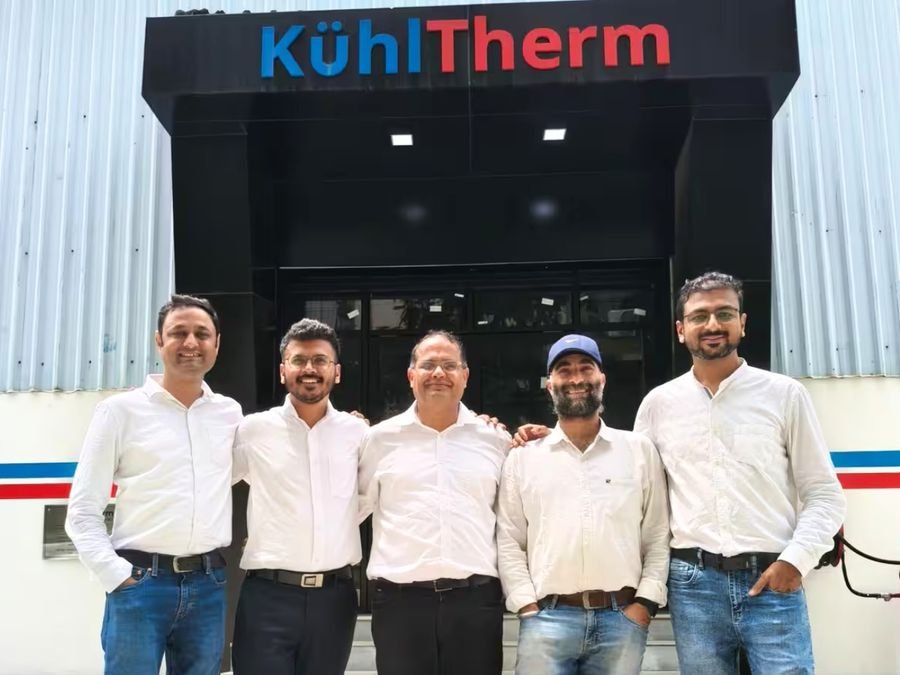
- Hardware & Lab Launch: Specifically, Ahmedabad-based KühlTherm launched indigenous Rear Door Heat Exchangers (RDHx) and Cooling Distribution Units (CDUs), alongside India’s first integrated liquid cooling validation laboratory.
- Full-Stack Integration: Additionally, the hardware connects to NexusFlow OS, a proprietary AI thermal platform that manages cooling loop parameters from chip to chiller.
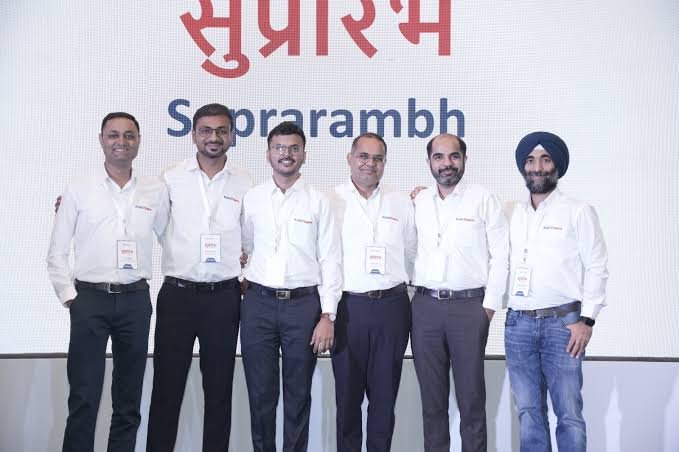
- Funding & Expansion: Following a 1.1 million dollar seed round led by Arkam Ventures, KühlTherm plans to scale its manufacturing capacity from 300 MW to 2 GW by 2027.
Executive Overview
As artificial intelligence clusters push server rack power densities beyond 100 kW, cooling is no longer a secondary facility requirement. Instead, thermal management is now the primary operational bottleneck threatening high-density data centre deployment. In a major step for hardware infrastructure, Ahmedabad-based startup KühlTherm launched Made-in-India liquid cooling systems, including Rear Door Heat Exchangers (RDHx) and Cooling Distribution Units (CDUs).
Furthermore, the company unveiled India’s first integrated liquid cooling validation laboratory to test thermal hardware under real-world operating conditions. Backed by Arkam Ventures, KühlTherm demonstrates that physical infrastructure offers massive venture opportunities.
Below, we examine KühlTherm’s product launch, how NexusFlow OS automates thermal loop parameters, and why liquid cooling is essential for next-generation AI workloads.
What Are KühlTherm’s New Made-in-India Liquid Cooling Systems for AI Data Centres?
Until recently, Indian data centres relied heavily on imported liquid cooling components. However, international hardware carries high lead times, steep import tariffs, and complex maintenance logistics.
To solve this supply chain friction, KühlTherm engineered a complete, indigenous liquid cooling stack. Specifically, the company launched two core hardware systems designed for high-density GPU racks.
Both products are manufactured entirely in India. Consequently, this domestic supply chain allows local data centre operators to deploy liquid cooling infrastructure faster and at a lower capital cost.
To understand why venture capital is flooding into physical hardware and energy infrastructure, read Tepi AI’s analysis on Why VCs Are Betting Billions on Physical AI Instead of Apps.
How Does Rear Door Heat Exchanger (RDHx) Technology Cool High-Density Server Racks?
Traditional air cooling relies on giant fans blowing chilled air across server rooms. However, when server racks consume between 50 kW and 100 kW of power, air cooling becomes physically inefficient.
In contrast, Rear Door Heat Exchanger (RDHx) technology captures heat directly at the server rack level. The RDHx unit attaches to the back frame of a standard server enclosure.
As warm exhaust air leaves the server components, it passes immediately through liquid-filled cooling coils in the rear door. As a result, heat is absorbed into the liquid loop before hot air can enter the broader facility.
Furthermore, KühlTherm’s RDHx ProSeries uses variable-speed fans and modular liquid circuits. Therefore, the system automatically adjusts cooling performance based on real-time GPU computational loads.
How Does the Cooling Distribution Unit (CDU) Manage Coolant Flow and Pressure?
While the RDHx absorbs heat at the rack, the Cooling Distribution Unit (CDU) acts as the central heart of the liquid cooling infrastructure.
The CDU sits between the facility’s main water supply and the server rack liquid loops. Specifically, it delivers precise coolant flow, temperature regulation, and fluid pressure control across multiple server rows.
KühlTherm’s CDUs are engineered in modular blocks scaling from 250 kW to 1.5 MW per row. Additionally, built-in dual pumps and leak-free quick-disconnect fittings ensure continuous operation without risking server uptime.
For insights into how foundational hardware shifts impact overall technology strategy, explore Tepi AI’s breakdown on how Anthropic Just Changed How Smart Founders Should Build AI Startups.
What Is NexusFlow OS, KühlTherm’s AI Thermal Intelligence Platform?
Hardware alone is not enough to maintain optimal data centre efficiency. Therefore, KühlTherm integrated its liquid cooling hardware with NexusFlow OS, a proprietary AI software platform.
NexusFlow OS connects facility power systems from grid to rack with thermal infrastructure from chip to chiller. Specifically, the software provides three key capabilities:
- Real-Time Visibility: Continuously monitors fluid temperature, flow rates, and pressure across every cooling loop.
- Predictive Optimization: Uses machine learning models to anticipate GPU thermal spikes before chips overheat.
- Autonomous Orchestration: Automatically adjusts pump speeds and chiller valves to maintain maximum energy efficiency.
As a result, data centre operators reduce total power usage effectiveness (PUE) while protecting expensive GPU accelerators from thermal throttling.
Why Is Liquid Cooling Replacing Air Cooling in High-Density AI Data Centres?
The transition from air cooling to precision liquid cooling is driven by physical thermodynamics. Modern AI processors, such as high-end Nvidia and AMD GPUs, generate concentrated heat hotspots that air cannot dissipate.
In fact, water transfers heat roughly 3,500 times more effectively than air. Consequently, liquid cooling offers major operational advantages for high-density computing:
Moreover, liquid cooling reduces fan noise and lowers facility power consumption. Therefore, data centre operators can pack significantly more compute power into smaller physical real estate footprints.
Actionable Takeaways for Startup Founders
- Evaluate Physical AI Opportunities: First, recognize that physical hardware and thermal infrastructure represent high-growth venture opportunities.
- Design for Local Operating Conditions: Second, engineer hardware solutions specifically hardened against local climate and power grid challenges.
- Combine Hardware with Software: Third, integrate hardware components with intelligent software orchestration platforms like NexusFlow OS.
- Access Founder Resources: Finally, for ongoing analysis, startup news, and growth guides, explore Tepi AI’s Essential Insights for Founders and Startups.
Written by Arnav Bhardwaj