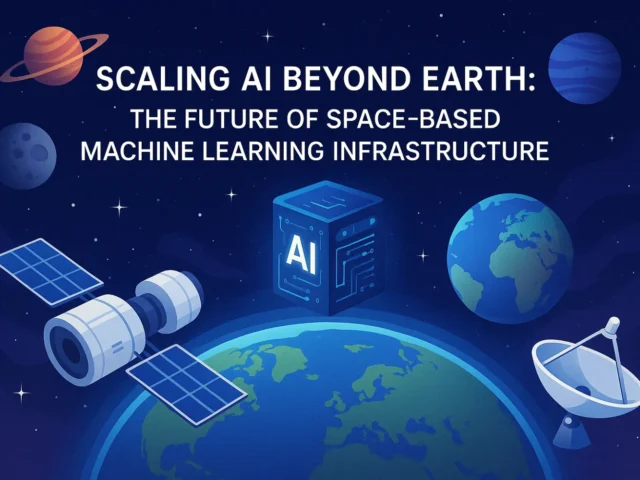
For years, the world saw SpaceX as “the rocket company.”
Reusable rockets. Mars dreams. Satellite launches. Starlink internet.
But if you read between the lines of its newly filed S-1, a very different story emerges.
SpaceX is no longer just competing in aerospace.
It’s positioning itself as one of the world’s biggest AI infrastructure companies.
And that changes everything.
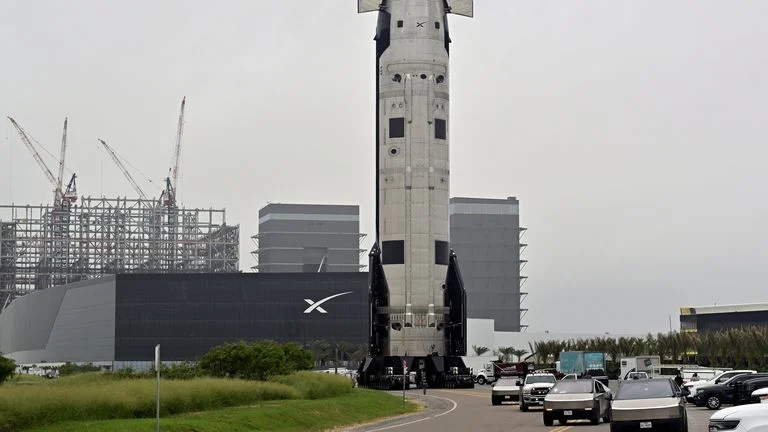
The Most Unexpected Pivot in Tech
The biggest surprise inside the filing wasn’t launch revenue.
It wasn’t Starlink.
It wasn’t even defense contracts.
It was AI compute.
According to the filing, SpaceX is aggressively expanding into large-scale AI infrastructure through multiple initiatives:
- Absorbing capabilities from xAI
- Building a chip manufacturing initiative called Terafab
- Partnering with Tesla and Intel on compute hardware
- Planning orbital data centers by 2028
- Signing massive compute agreements with Anthropic reportedly worth up to $40 billion
That last number alone is enough to reshape the AI market.
The filing reportedly references infrastructure commitments reaching nearly $1.25 billion per month through 2029.
That’s hyperscaler-level spending.
Not startup spending.
Not even “big tech experiment” spending.
This is industrial-scale AI infrastructure.
Rockets Were the Entry Point. Infrastructure Is the Real Game.
Most companies trying to enter AI infrastructure face three major bottlenecks:
- Power
- Compute
- Distribution
SpaceX may be one of the few companies on Earth positioned to control all three.
Think about it:
- Rockets → launch capability
- Starlink → global network layer
- Satellites → orbital distribution
- AI chips → compute layer
- Data centers → processing power
- Energy partnerships → long-term scalability
That’s vertical integration on a level the cloud industry has never seen before.
Traditional cloud giants like Amazon Web Services, Microsoft, and Google built infrastructure around terrestrial internet systems.
SpaceX is building infrastructure that extends beyond Earth.
And suddenly, “space-based compute” doesn’t sound crazy anymore.
Orbital Data Centers: Science Fiction Is Becoming a Business Model
One of the most fascinating parts of the filing is the long-term vision for orbital compute infrastructure.
At first glance, putting data centers in space sounds absurd.
Until you think about the economics.
Future AI systems will require unimaginable amounts of:
- Electricity
- Cooling
- Physical land
- Networking throughput
Earth already struggles with data center energy demands.
Now imagine orbital infrastructure powered by solar energy, connected through satellite networks, with global low-latency routing.
The idea stops sounding futuristic.
It starts sounding inevitable.
If SpaceX succeeds, it could fundamentally change how humanity thinks about cloud computing.
The “cloud” may literally move into space.
AI Capex Is Growing Faster Than Rockets
That may be the single most important signal in the entire filing.
For years, launch systems defined SpaceX’s growth story.
Now AI infrastructure spending is reportedly becoming one of its fastest-growing segments.
That matters because capital allocation reveals company priorities better than marketing ever can.
And right now, the money is flowing heavily into compute.
This reflects a broader shift happening across the tech industry:
The next trillion-dollar race isn’t just about AI models.
It’s about who owns the infrastructure underneath them.
Why Founders Should Pay Attention
This isn’t just billionaire tech drama.
It has real implications for startups.
1. The AI Infrastructure Market Is Expanding Fast
Until recently, AI infrastructure was dominated by a few giants.
Now new players are entering aggressively.
More competition usually means:
- Better pricing
- More access
- Faster innovation
- Lower barriers for startups
That’s good news for founders building AI products.
2. AI Is Becoming a National-Scale Industry
We’re entering an era where governments, defense systems, telecom networks, cloud providers, and space companies are all converging around AI infrastructure.
This isn’t a “software trend” anymore.
It’s becoming foundational infrastructure — like electricity or the internet.
Founders who understand this early will build differently.
3. Public Markets Are Opening Again
The timing here is important.
Reports also suggest OpenAI is preparing for its eventual IPO path.
That means something bigger is happening:
The public market window for AI companies is opening.
For years, AI wealth creation stayed mostly private.
Now retail markets may finally start participating in the next wave of AI infrastructure and platform companies.
For startups, this creates new possibilities around:
- Funding
- Acquisitions
- Strategic partnerships
- Long-term exits
The ecosystem is maturing rapidly.
The Bigger Picture
A few years ago, the idea of a rocket company becoming a major AI infrastructure player would’ve sounded ridiculous.
Today, it feels logical.
That’s how quickly the technology landscape is changing.
The future AI giants may not look like traditional software companies at all.
They may look like:
- Energy companies
- Semiconductor manufacturers
- Robotics firms
- Telecom operators
- Aerospace giants
Or companies that combine all of them together.
And SpaceX may be showing us what that future looks like first.
Final Thoughts
The most important takeaway from the SpaceX S-1 isn’t just that the company is going public.
It’s that AI infrastructure is becoming the defining industry of this decade.
The companies that control compute, energy, networks, and distribution will shape the future of AI.
And increasingly, those companies are thinking far beyond Earth.
If you enjoy deep dives on AI, startups, business shifts, funding trends, and the future of technology, subscribe to the Tepi AI Newsletter and stay ahead of what’s coming next.